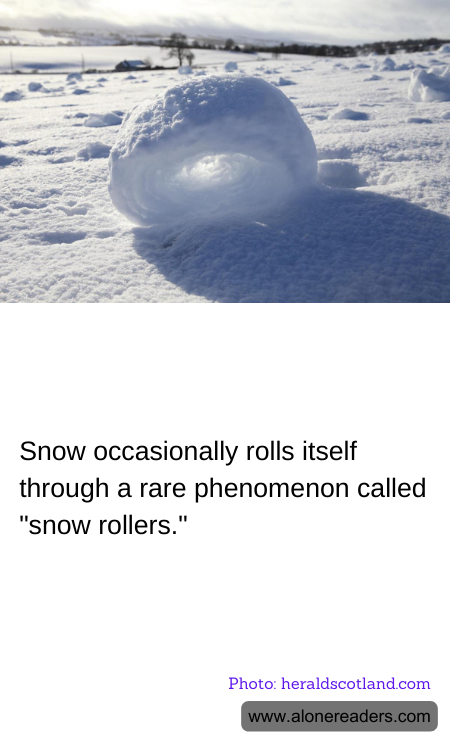
Snow rollers are a natural phenomenon that occurs under very specific weather conditions, creating cylindrical snow formations that resemble small bales of hay or oversized doughnuts. These formations can be quite the spectacle, often found in open fields or on hilltops after certain winter storms. The creation of snow rollers is a delicate process, reliant on a precise combination of snow, wind, temperature, and moisture.
The phenomenon begins with a layer of loose, wet snow on the ground, usually deposited by a fresh snowfall. This base layer must be icy or crusty, providing a slick surface that allows new snow to roll over it. The temperature plays a crucial role as well; it needs to be near the melting point of snow. If it’s too cold, the snow will be too powdery and fail to stick, preventing the rollers from forming.
Wind is the driving force behind the movement of snow rollers. It must be strong enough to push the snow but not so strong that it breaks apart the forming structures. As the wind pushes the snow along the ground, it picks up additional snow, creating a snowball effect—though instead of a ball, the shape is more cylindrical. The hollow center forms because the weaker inner layers, which start the rolling process, are not as tightly packed as the outer layers.
Snow rollers can vary in size but typically range from a few inches to several feet in diameter. They are mostly seen in hilly areas because gravity aids their formation and movement. Due to their fragile nature and the specific conditions needed to form them, snow rollers are relatively rare and can be a delightful sight for winter enthusiasts and photographers.
The ephemeral nature of snow rollers, appearing and disappearing with changing weather conditions, serves as a beautiful reminder of the delicate balance within our natural world. Their rarity and unique formation process make them a fascinating subject for study in meteorology and environmental science, providing insights into the complex interplay of factors that influence our weather and climate.
