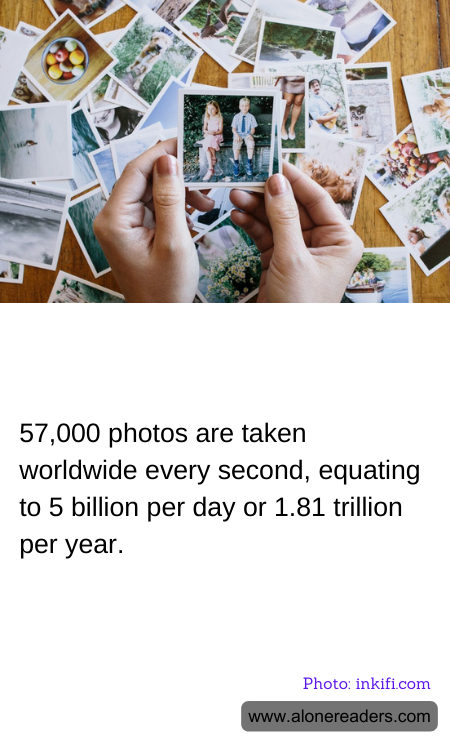
In today's digital age, the surge in photo taking is staggering. Approximately 57,000 photos are snapped every second around the globe, which translates to a daily count of 5 billion, and astonishingly, 1.81 trillion photos each year. This remarkable number reflects not just a growing population but also an increasing access to technology, particularly smartphones, which have invariably transformed every one of us into photographers. The ease of capturing, storing, and sharing images, alongside the rise of social media platforms, has fundamentally shifted how we communicate and preserve our memories.
Photography's evolution from a labor-intensive process to an instantaneous act accessible to everyone has both democratized the ability to document our lives and raised concerns about privacy, security, and the sheer volume of data we generate. These billions of photos create a rich tapestry of human life, capturing everything from mundane moments to monumental events. Every frame serves a purpose, whether it's a simple selfie, a breathtaking landscape, a poignant street scene, or a family photo that will be treasured for generations.
Moreover, this surge in photo creation is powering economies and innovating industries. Tech companies continually advance photo-editing tools and storage solutions, while advancements in artificial intelligence offer new ways to manage and analyze our ever-growing collections. The photography boom also challenges us to think about sustainability, as data storage becomes an increasingly resource-intensive operation.
Yet, beyond the numbers and the technology, these billions of photos signify a universal language of imagery that transcends cultural and linguistic boundaries. They allow us to share our personal stories and to witness others' lives even from afar. This ubiquitous habit of photo-taking, therefore, is not just about capturing faces and places but is a profound way of connecting with the world and expressing ourselves.
As we look to the future, it's clear that photography will continue to be an integral part of our digital narrative. The challenge will be in managing this vast visual data responsibly and finding meaningful ways to utilize these snapshots not just to remember our past, but also to understand and shape our future.
