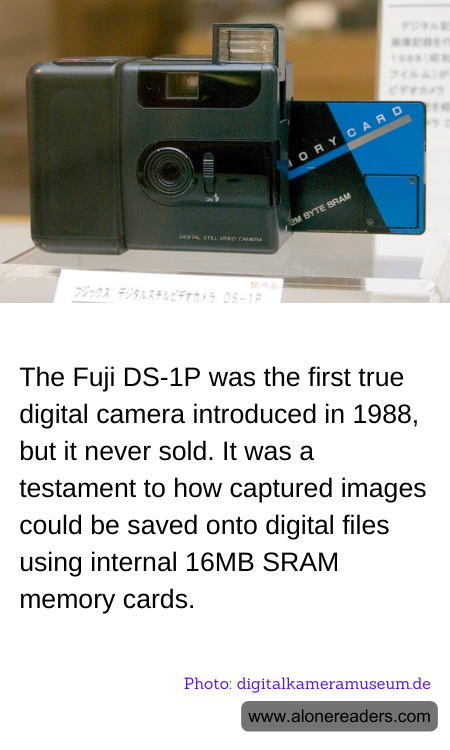
In 1986 digital imaging took a giant leap forward with the introduction of the Fuji DS-1P, the very first digital camera capable of capturing images as digital files. This revolutionary technology featured an internal 16MB SRAM memory card, marking a significant departure from traditional photographic methods that relied on film. Despite its groundbreaking technology, the Fuji DS-1P never actually reached the consumer market.
The Fuji DS-1P was designed to explore the potential of digital photography. At its core, the device utilized a Charge-Coupled Device (CCD) sensor, a technology that converts light into electronic signals, effectively facilitating the transition from analogue to digital imagery. The employment of a 16MB SRAM card for storage was particularly innovative, as it allowed the camera to store data digitally without needing to revert to physical film. This approach not only promised to change how photos were taken but also how they were stored and viewed.
However, despite its innovative features, the Fuji DS-1P was never sold to the public. This was primarily due to several factors including the high cost of production and the limitations of early digital technology, which could not yet match the quality of film photography. Additionally, the market readiness for such advanced technology was not yet established, as many consumers and professionals were still accustomed to traditional film cameras.
The significance of the Fuji DS-1P lies not in its commercial success but in its pioneering role in digital photography. It set the stage for the development of new technologies and paved the way for future advancements. In the years that followed, digital cameras would grow increasingly sophisticated and affordable, eventually becoming a staple in consumer electronics. Today, digital cameras are ubiquitous, integrated into everything from mobile phones to sophisticated professional photography equipment, a testament to the enduring legacy of early innovators like Fuji.
