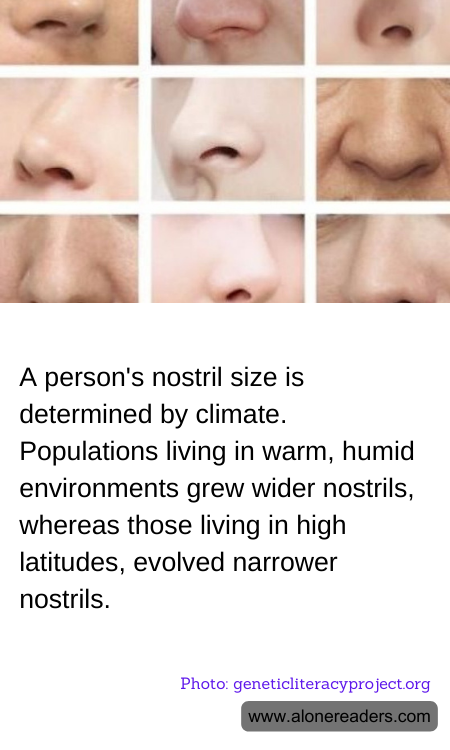
Human anatomical features have adapted over thousands of years to best suit their environments, and an interesting example of this is the variation in nostril size among different populations. Research has shown that climate has played a significant role in influencing the size and shape of human nostrils. Specifically, nostril size tends to correlate with the humidity and temperature of a region. Inhabitants from warm, humid areas typically have wider nostrils compared to those from cooler, drier regions who have narrower nostrils.
This variation can be explained through the principle of natural selection, which suggests that certain physical traits become more prevalent in a population if they offer some benefit towards survival and reproduction. In hotter climates, wider nostrils help in increasing the inhalation of air, thereby aiding the body in cooling more efficiently. This is advantageous in tropical regions where the body needs to dissipate heat effectively to maintain homeostasis. Moreover, the increased air intake allows for a larger amount of air to come into contact with the moist nasal passages, enhancing the humidity of the inhaled air, which is beneficial in dry climates.
Conversely, in cold, dry climates, narrower nostrils serve a different purpose. They reduce the amount of air inhaled with each breath, which helps to warm and humidify the air before it reaches the lungs. This is crucial in avoiding cold air-induced respiratory issues such untroublesome discomfort to more serious conditions. Narrow nostrils are, therefore, an adaptation meant to maximize the internal warming and humidification of air, making breathing in cold environments more efficient and less harmful.
These adaptations highlight the subtlety and complexity of human evolution. The size and shape of nostrils along with many other physical features demonstrate how human populations have evolved distinct characteristics in response to their specific environments. Such evolutionary adaptations contribute significantly to our understanding of the interplay between human biology and the environment. This knowledge not only enriches our grasp of human anatomy and evolutionary biology but also has implications for medical practices, like reconstructive surgery and the treatment of respiratory conditions, taking into account the individual's ethnic or genetic background to optimize outcomes.
