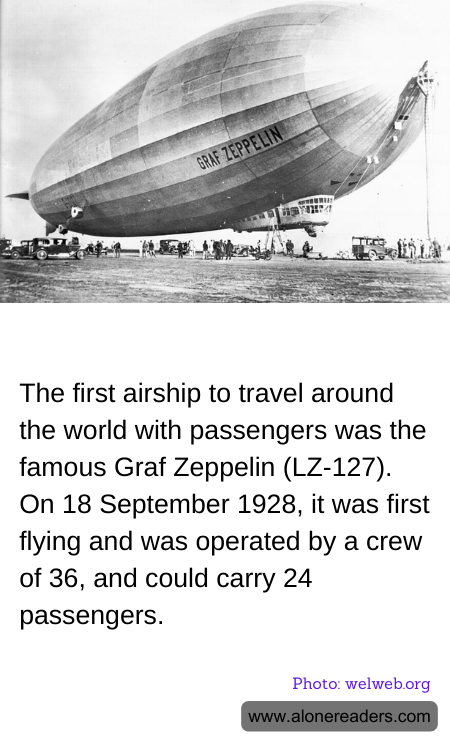
The Graf Zeppelin (LZ-127) marked a significant milestone in aviation history as it became the first airship to travel around the world with passengers. First taking to the skies on 18 September 1928, this massive airship was an engineering marvel of its time, showcasing the potential of controlled dirigible flight. Operated by a well-trained crew of 36, the Graf Zeppelin had the capacity to carry up to 24 passengers, offering them a unique and luxurious experience unprecedented in air travel.
The journey around the world by the Graf Zeppelin was not just a testament to human ingenuity but also an important cultural event that captivated the global audience. The airship, measuring an impressive 236.6 meters in length and powered by multiple engines, could reach speeds of up to 128 kilometers per hour. Its design included spacious passenger cabins, a dining area, and large viewing windows, providing comfort and breathtaking panoramic views of the landscapes below.
The world tour of the Graf Zeppelin highlighted its capabilities and reliability, traversing vast distances over both land and sea, and effectively shrinking the globe in the eyes of those who followed its journey. Despite the risks associated with early airship travel, including variable weather conditions and the inherent dangers of hydrogen-filled balloons, the Graf Zeppelin successfully completed its global circuit, landing safely back in its home base.
This historic circumnavigation not only demonstrated the feasibility of long-distance airship travel but also inspired future advancements in aviation technology. The legacy of the Graf Zeppelin lives on as it paved the way for the development of more advanced airships and, ultimately, modern aviation as we know it today. Its successful around-the-world trip remains a symbol of adventurous spirit and technological prowess, capturing the imagination of people around the world and pushing the boundaries of what was possible in the early 20th century.
