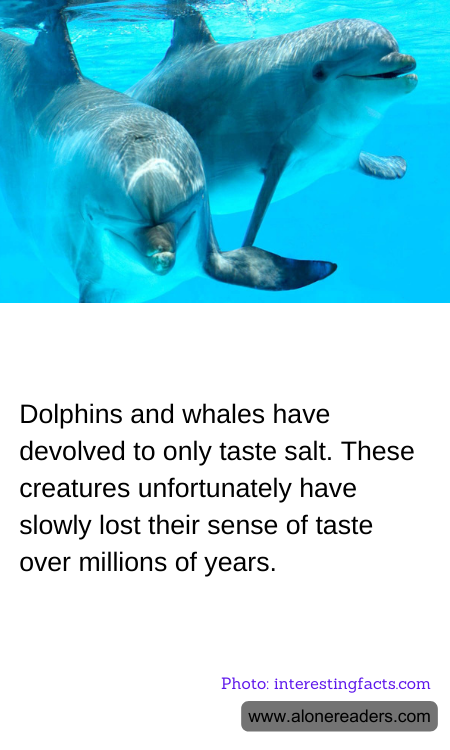
Dolphins and whales, remarkable as they are, present a curious case in the evolution of taste among marine mammals. It is believed that over millions of years, these creatures have undergone a significant reduction in their sense of taste. What remains is predominantly a sensitivity to only one of the basic tastes: salt. This devolution of taste is thought to be aligned with their aquatic lifestyles and diet.
Originally, like many mammals, ancestors of dolphins and whales likely possessed a fully functional palate, capable of detecting sweet, sour, bitter, and umami flavors, in addition to salt. However, as these animals adapted more profoundly to marine environments, changes in their genetic makeup led to a gradual loss of some taste receptors. Studies suggest that this evolutionary trend is predominantly due to the nature of their diet, which consists largely of salty ocean fish and squid. These foods do not require a diverse palette to process, potentially making certain taste receptors superfluous.
The genetic changes in dolphins and whales regarding taste involve the mutation and eventual loss of function of certain genes responsible for taste receptors other than those needed for detecting salt. For example, the gene TAS1R2, which helps encode the receptor for tasting sweetness, is nonfunctional in these animals. Similarly, receptors for bitter and umami tastes show signs of degeneration. Interestingly, these genetic modifications do not unfavorably affect their survival capabilities; instead, they reflect an intriguing adaptation to the oceanic habitat, which is vastly different from terrestrial or freshwater environments.
Moreover, this taste receptor reduction could also be linked to the way dolphins and whales feed and process sensory information. Oftentimes, these animals swallow their food whole, negating the need for a sophisticated taste processing system. Furthermore, their reliance on echolocation for hunting might have shifted the sensory priority from taste to auditory and tactile senses, which are more critical for navigation and hunting in dark or murky waters.
While the loss of taste complexity in dolphins and whales might seem like a disadvantage, it is a poignant example of how evolution tailors species perfectly to their environments. By shedding unnecessary physiological functions, these marine mammals not only conserve energy but also streamline bodily functions that are crucial for survival in the vast and often unforgiving ocean landscape. This evolutionary process highlights the interconnectedness of habitat, behavior, and genetic adaptations, portraying a compelling narrative of life under the sea.
