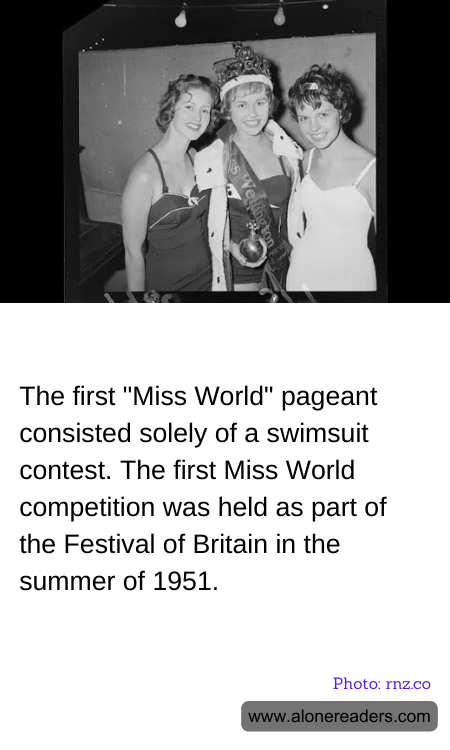
The inaugural Miss World pageant, held in 1951, marked a significant moment in the history of beauty contests. Originally conceptualized as a promotional event during the Festival of Britain, the competition was initially framed as a swimsuit contest. This event was structured to provide a light-hearted entertainment venue which would attract visitors to the festival, contributing to Britain's post-war revitalization efforts. Eric Morley, the event’s organizer, conceived the idea as the "Festival Bikini Contest," leveraging the then-controversial bikini swimsuit introduced by the French designer Louis Réard a few years earlier.
The contest was held at the Lyceum Ballroom in London and featured participants from multiple countries, dressed solely in swimsuits. The format and focus on swimwear embodied the typical beauty standards of that era, emphasizing physical beauty as the primary criterion for judgment. Kiki Haakonson from Sweden won the title, becoming the first-ever Miss World. Her crowning drew significant media attention, not just because of the title, but also because she was the only contestant to wear a bikini, which was seen as quite daring at the time.
Due to the massive popularity and media attention, the one-time event evolved into an annual affair. Over the years, the Miss World competition has significantly evolved, embracing a broader mission and incorporating various segments like talent, sports, and a strong emphasis on charity work and social causes. As it moved forward, the event increasingly focused on "Beauty with a Purpose," a shift from its simplistic, appearance-focused roots to more substantive matters, reflecting changing societal values over time.
The Miss World pageant's humble beginnings as a swimsuit contest during a national festival in Britain laid the groundwork for what would become one of the most recognizable and enduring global beauty contests. Its evolution from focusing primarily on physical appearance to highlighting the contributions, intelligence, and charitable engagements of its participants mirrors broader cultural shifts towards inclusivity and respect for women in various spheres of life.
