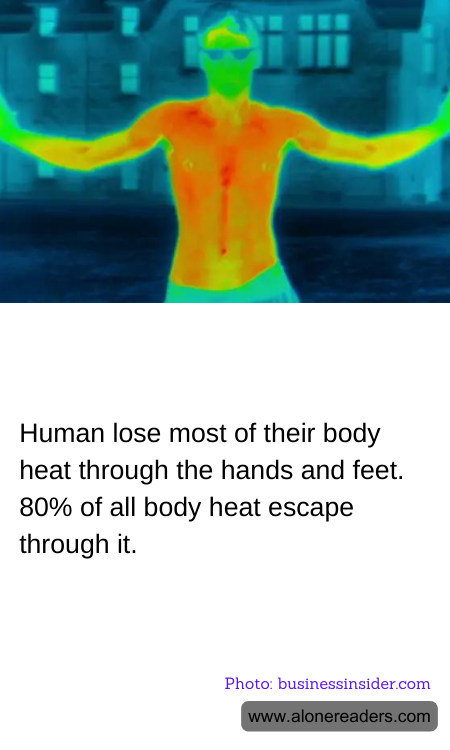
The idea that humans lose most of their body heat through their hands and feet is a widely believed notion. However, this statement is somewhat misleading and oversimplified. It is true that hands and feet can play a significant role in thermoregulatory processes, but the extent to which they contribute to total body heat loss is not as drastic as often portrayed.
Human body heat loss occurs through several mechanisms: radiation, convection, conduction, and evaporation. Heat can escape from any part of the body that is exposed to cooler external temperatures. The head, for instance, is another significant source of heat loss, particularly if it is not covered, leading to the old adage that we lose a majority of our body heat through our heads. This claim, similar to the one about hands and feet, has been debunked when considering that the head only represents a small percentage of the body's total surface area.
The concept that 80% of body heat is lost through the hands and feet seems to be a misconception stemming from the fact that these extremities are often less insulated and more exposed to the environment compared to other parts of the body. Hands and feet also contain specialized blood vessels that help regulate body temperature by changing diameter to increase or decrease heat loss. In cold conditions, these vessels can constrict to reduce blood flow and retain heat, while in hot conditions, they can dilate to increase blood flow and enhance heat dissipation.
While hands and feet are critical to overall body temperature regulation, they do not account for 80% of heat loss on their own. The percentage of heat loss from any body part depends greatly on how insulated it is and the environmental conditions. For example, wearing gloves and socks dramatically reduces heat loss from the hands and feet.
Overall, body heat loss is a complex interaction of multiple factors, including body composition, environmental temperature, clothing, and physical condition. The human body is adept at maintaining a stable internal temperature through the combined efforts of various systems, not just the hands and feet. Effective temperature regulation involves the whole body, emphasizing the importance of appropriate clothing and protection against extreme temperatures to prevent excessive heat loss from any part of the body.
