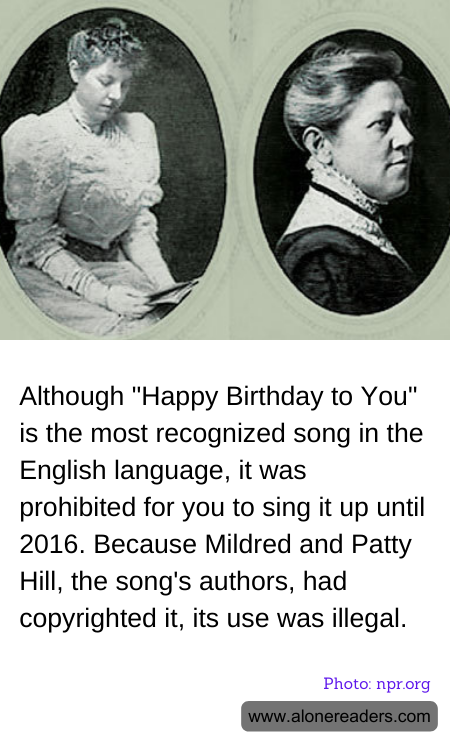
"Happy Birthday to You" is perhaps one of the most ubiquitously sung songs, celebrated across the globe in countless birthday celebrations. Despite its widespread familiarity and seemingly innocuous lyrics, until 2016, singing it in public without appropriate licensing was technically an infringement of copyright laws. The melody and lyrics of "Happy Birthday to You" were composed by Mildred and Patty Hill, two sisters from Kentucky who wrote the song in the late 19th century. Originally titled "Good Morning to All," the song was intended as a simple greeting for their kindergarten class. However, the tune proved so catchy that it quickly spread beyond the classroom.
Over time, the lyrics evolved into the birthday variant we are familiar with today, and the song transitioned into a staple at birthday parties. Due to its popularity, the Hill sisters decided to copyright the song. Warner Chappell Music, the music company, eventually acquired the rights to the song, earning a significant amount of royalties; it's estimated that the song generated about $2 million in licensing fees each year, illustrating the lucrative nature of copyright control.
The issue of whether "Happy Birthday to You" should be freely available for public consumption reached a critical point when a filmmaker named Jennifer Nelson, producing a documentary about the song, challenged the copyright after being charged a $1,500 fee to use it. In 2016, a landmark legal ruling finally placed the song into the public domain after it was determined that Warner Chappell did not own an enforceable copyright on the song's lyrics, only on specific piano arrangements.
This judgement was warmly received by the public and media outlets alike, as it essentially liberated "Happy Birthday to You", allowing it to be sung at parties, in public performances, and on media without fear of legal repercussions. The ruling not only underscored the complexities of copyright law but also highlighted the cultural significance of such a universally beloved song. It opened up discussions on the accessibility of music and the rights of creators versus the public’s right to cultural expressions. Thus, "Happy Birthday to You" continues to be a fascinating example of how legal, cultural, and economic factors intersect in the world of music copyrights.
