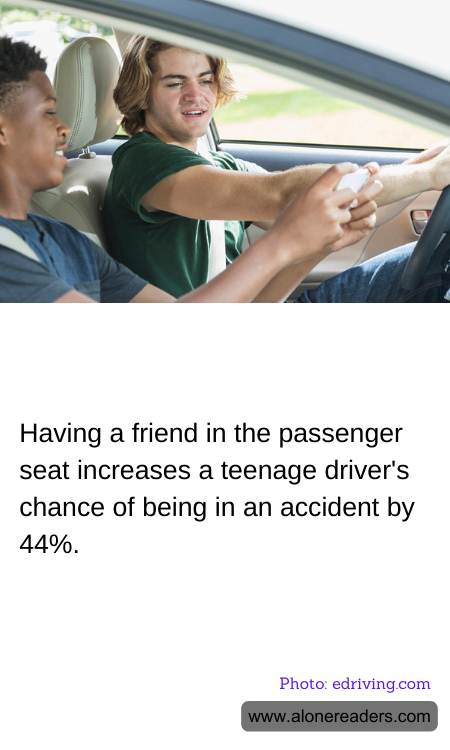
Driving as a teenager represents a significant step towards independence, but it also introduces substantial risks, particularly when other teenagers are passengers. Studies have illustrated a troubling statistic: the likelihood of a teenage driver being involved in an accident spikes by 44% when they have a friend in the passenger seat. This phenomenon stems from several factors primarily related to distractions and peer pressure.
Firstly, interaction with peers while driving can significantly shift a young driver's focus from the road. Conversations, whether serious or light-hearted, music selection, and even offhand comments can lead a driver to divert their attention from driving. The risk intensifies if the conversation turns to emotionally charged subjects or debates, making concentration on navigating traffic and road signals challenging.
Secondly, the presence of friends can spur young drivers to demonstrate risky driving behaviors they would otherwise avoid if driving alone or with adults such as parents or guardians. This includes speeding, erratic driving, and not obeying traffic rules, driven by a desire to impress or entertain their peers. Such daredevil behavior is particularly seductive in adolescence, a developmental stage characterized by exploration and testing boundaries but often marked by an underdeveloped sense of caution and risk assessment.
Moreover, teen passengers may actively encourage reckless driving, either explicitly, by daring the driver to perform risky maneuvers, or implicitly, through the general escalation of excitement and chaos typical of youthful group interactions. This kind of peer pressure can be hard to resist, particularly for a young, inexperienced driver eager to fit in and not appear timid or overly cautious.
However, the risks are grave. Motor vehicle crashes are the leading cause of death for U.S. teens, according to the Centers for Disease Control and Prevention. In response to these risks, many states have implemented graduated driving laws. These laws often include a phase during which teenage drivers are prohibited from carrying teenage passengers without adult supervision. Such measures aim to mitigate risks by limiting young drivers' exposure to peer-related distractions and pressures during their formative driving years.
Teaching young drivers about the risks associated with driving with peers, combined with strategies for managing or resisting peer pressure, is crucial. It is equally necessary for parents to discuss and reinforce these laws and guidelines to foster responsible, safe driving habits. Encouraging awareness and responsible behavior can dramatically reduce the risks associated with teenage driving, saving lives and preventing tragedies.
