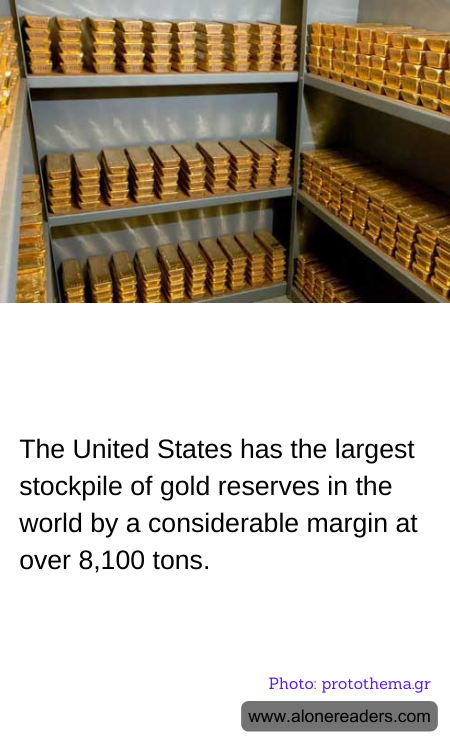
The United States holds the distinction of possessing the largest stockpile of gold reserves in the world. With over 8,100 tons of gold, the U.S. surpasses other countries by a considerable margin. This substantial accumulation of gold is primarily housed at Fort Knox, as well as other secure locations around the country such as the Federal Reserve Bank of New York’s vault and the U.S. Mint at West Point. This stockpile represents a significant aspect of the country's financial security, offering a buffer against economic fluctuations and reinforcing the strength of the U.S. dollar.
Gold reserves have historically played a crucial role in economic strategies across the globe. For the United States, gold reserves have been a cornerstone of monetary policy especially during periods of economic uncertainty. During times of economic instability, countries often turn to gold as a safe haven asset that can help stabilize national currencies. The substantial amount of gold held by the U.S. is thus not merely a symbol of wealth but a strategic reserve that underpins the financial security of the nation.
Furthermore, the size of U.S. gold reserves is also a tool of economic influence worldwide. It provides the United States with leverage in international finance and a substantial level of confidence among investors. This is reflected in the strength and stability of the U.S. dollar, which is the principal reserve currency used globally and one of the key reasons why many countries maintain their own reserves in U.S. dollars.
However, managing such large reserves comes with its own set of challenges and responsibilities. The value of gold can fluctuate widely, and the decision when to buy or sell gold to maximize benefits or minimize costs can impact not only the U.S. economy but also the global market. In addition, the physical security of such a vast and valuable resource is a perpetual challenge, requiring constant vigilance and state-of-the-art security measures.
In conclusion, the U.S. gold reserve is a vital asset that plays a multi-dimensional role in the nation's economic strategy. It not only serves as a financial safeguard but also enhances the country's leverage in global economics. As the global landscape evolves, the strategic importance of such reserves will likely continue to influence both national and international financial policies.
