Despite the modern array of digital devices at our fingertips, traditional writing instruments like pens and pencils remain indispensable. Pens, often praised for their permanence and professional appearance, are a common choice. However, it’s the humble pencil that truly astonishes with its potential longevity and versatility.
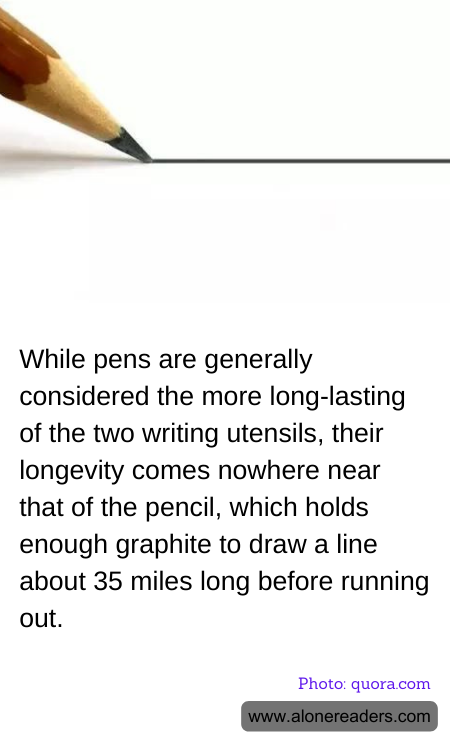
Pencils, typically made of a graphite core encased in wood, are marvels of endurance. The graphite in a single pencil can draw a line up to 35 miles long. This remarkable feat underscores not only the efficiency of the pencil but also its economic value. In contrast, pens can vary widely in terms of ink capacity and lifespan, which is often much shorter in length compared to the extensive line a pencil can produce. Additionally, the ability to erase pencil markings adds a layer of convenience and flexibility that is particularly beneficial in environments like education, art, and design, where adjustments may be frequently necessary.
Moreover, pencils do not rely on the flow of ink to function and can perform in various conditions and orientations – even in zero gravity. This was famously demonstrated during historic space missions, where astronauts used specially designed mechanical pencils. The resilience and reliability of pencils are further exemplified in various professions; for example, construction workers and carpenters favor carpenter pencils, which are not only tough but also designed not to roll away when placed on inclined surfaces.
The environmental impact of pencils is also comparatively mild. While both pens and pencils have their environmental drawbacks, pencils are generally made from more sustainable materials. The wood for pencils can be sourced from well-managed forests or recycled wood, and they lack the complex blend of plastics, metals, and potentially toxic inks found in many pens. After a pencil’s usable life ends, it leaves minimal waste, whereas discarded pens can contribute significantly to plastic pollution.
In conclusion, while pens offer certain advantages, like a smudge-proof and usually more crisp writing quality, pencils provide unmatched longevity, eco-friendliness, and practical versatility, proving that sometimes traditional solutions hold an unexpectedly modern appeal. This quiet efficiency makes pencils not just a tool of the past, but a continued asset for the future.
