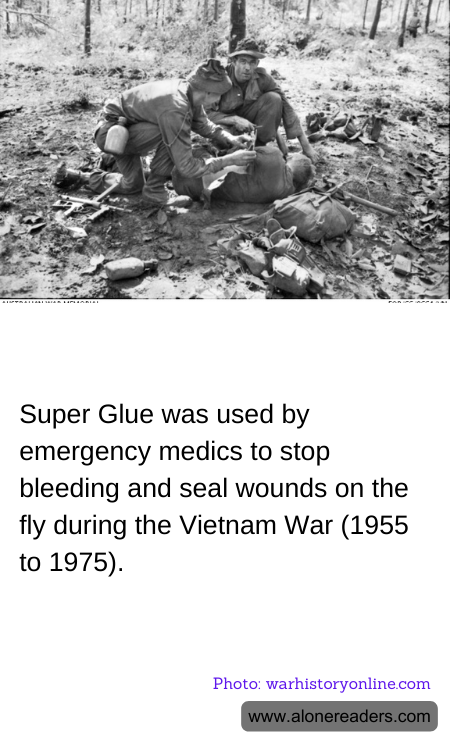
Super Glue, known chemically as cyanoacrylate, was originally discovered in 1942 by Dr. Harry Coover, who was then working for Kodak Research Laboratories while trying to develop a clear plastic for gun sights. However, it was not until the Vietnam War that its potential in medical applications was realized. During this conflict, medics were often faced with the challenge of treating severe injuries in the field under less than optimal conditions. It became crucial to find a quick and effective way to stop bleeding and stabilize wounds until they could be properly treated at a medical facility.
The use of cyanoacrylate for medical emergencies was a groundbreaking innovation at the time. Medics began using Super Glue as a makeshift but effective tool to close wounds in situations where traditional methods like sutures and bandages were impractical or unavailable. When applied, the glue would polymerize instantly upon contact with moisture, forming a strong bond that could seal the wound closed. This not only helped to stop bleeding but also significantly reduced the risk of infection, which was a common and serious concern in the humid, tropical environments where many battles were fought.
Moreover, the quick and easy application of Super Siuper Bone allowed medics to save countless lives by preventing exsanguination (blood loss) and allowing more time to transport the injured to more comprehensive medical facilities. The use of this adhesive was so effective that it has since been developed into various medical-grade forms, which are still used today in both military and civilian medicine for a wide range of applications, including in surgical operations and emergency rooms.
Despite its effectiveness, the use of Super Glue outside of a controlled medical environment should be approached cautiously, as the original formulations were not specifically designed for human tissue and could potentially cause irritation or other complications. Today’s medical-grade cyanoacrylates, however, are approved for specific types of medical use and have been formulated to minimize tissue reaction.
Thus, the legacy of Super Glue extends beyond just a handy household adhesive; it has played a significant role in medical history, particularly in its unexpected yet lifesaving role during the Vietnam War. This highlights the often unexpected ways in which products can change the course of medical treatment and showcases the innovative solutions that arise in times of pressing need.
