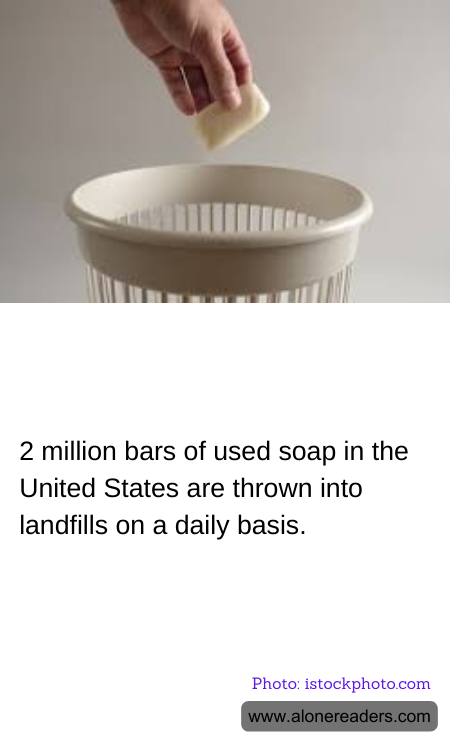
In the United States, a staggering two million bars of used soap are thrown away each day, amounting to a significant environmental concern. These discarded soap bars contribute to the ever-growing issue of landfill overflow, where non-biodegradable waste accumulates and degrades at a slow pace. This not only consumes valuable land resources but also poses a serious threat to our ecosystem and public health.
The root of the soap waste problem lies in both residential and commercial sectors, particularly in large hotels, where barely used soap bars are often discarded after guests check out. Despite soap’s capability to be recycled and sanitized for further use, the majority of these facilities lack the necessary collection and recycling programs to manage soap waste efficiently.
However, addressing this issue presents a viable opportunity for both environmental sustainability and community health improvements. Organizations like Clean the World are leading the way by collecting, sanitizing, and redistributing recycled soap bars to communities in need, particularly in developing countries that are hit hardest by hygiene-related illnesses.
Recycling soap not only helps reduce waste and prevent environmental pollution but also promotes better hygiene practices around the world. By providing access to soap, we can significantly decrease the incidence of diseases like diarrhea and pneumonia, which are two of the leading causes of death in children under five years old in many underprivileged communities.
The process of recycling soap involves grinding down the collected soap scraps, sanitizing them through a heating process, remolding into new bars, and finally, distributing them to those in need. This not only provides a sustainable solution to waste but also a practical improvement in global health standards.
Awareness and participation are critical in scaling up the soap recycling movement. Businesses, especially within the hospitality industry, can implement soap recycling programs to ensure that their environmental footprint is minimized. Simple changes in operations can lead to significant environmental benefits and enhance the well-being of impoverished communities.
Therefore, it's imperative for more companies and individuals to recognize the potential of such initiatives and support them actively. By doing so, we not only tackle the issue of landfill waste but also contribute to a healthier planet where community hygiene and well-being are elevated through collective and concerted efforts.
