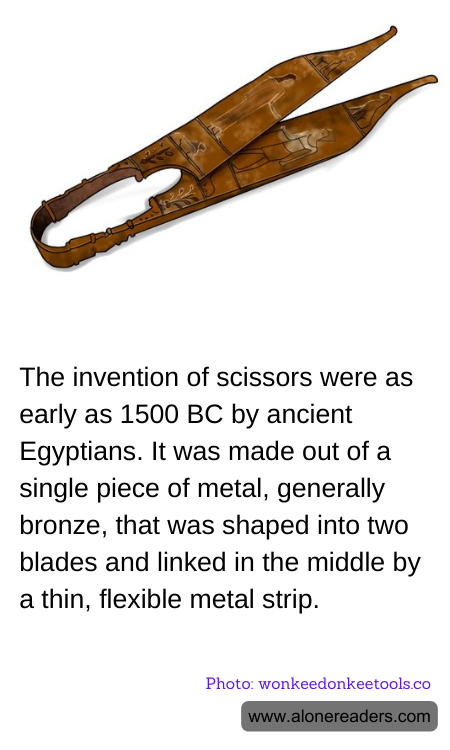
The intriguing history of scissors stretches back to as early as 1500 BC, when ancient Egyptians crafted the first known versions of this indispensable tool. Unlike the modern pivot scissors we are familiar with today, these early scissors were made from a single piece of metal, typically bronze. The metal was cleverly fashioned into two blades that were conjoined at the middle by a slim, flexible strip of metal, which acted as a spring. When the blades were pressed together, the cutting action was achieved, and when the pressure was released, the flexible metal strip would bring the blades back to their open position.
This design was markedly different from the cross-blade scissors that were later developed in ancient Rome around 100 AD. Roman scissors featured pivoted blades similar to contemporary scissors, where the blades were fastened at a point, allowing for more precise and efficient cutting. This pivot-based design transformed the functionality and efficiency of scissors, leading to widespread adoption and adaptation through various cultures over the centuries.
Scissors have evolved significantly since their ancient origins, adapting to the needs and materials of different eras. In the Middle Ages, for example, scissors were a valuable tool, often made by skilled craftsmen and could be quite elaborate and expensive. By the Renaissance, scissors had become an everyday item, used in various trades like tailoring and barbering, demonstrating their versatility and essential role in both domestic and professional settings.
The industrial revolution of the 19th century brought further innovations to scissor production, with advancements in manufacturing processes and materials, such as steel, allowing for mass production of more durable and sharper scissors. This period also saw the introduction of specialized scissors, such as those designed specifically for cutting particular materials or for use in specific trades, such as tailoring or surgery.
Today, scissors are a ubiquitous tool found in homes and workplaces around the world, available in a wide array of styles, sizes, and for various functions. From the kitchen to the craft room, their essential design remains a testament to their enduring utility and the ingenuity of their creators. The development of scissors not only highlights a technological evolution but also reflects the cultural and economic shifts through the ages. As simple as they may seem, scissors are a profound example of how a basic tool can have a lasting impact on everyday life and civilization itself.
