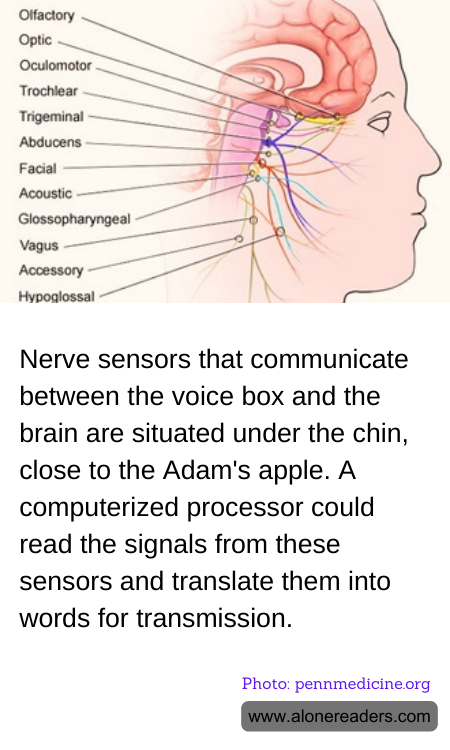
Innovative advancements in the field of communication and assistive technology have seen significant strides toward aiding those with speech impairlications. One such breakthrough involves the use of nerve sensors located beneath the chin, close to the Adam's apple, which play a critical role in the intricate communication between the voice box and the brain. These sensors pick up subtle neuromuscular signals that are typically involved in speech production, even if these do not result in audible speech.
A computerized processor, when connected to these nerve sensors, can interpret the electrical and neuromuscular signals emitted as a person tries to speak. This processor works by analyzing patterns in the signals to determine the intended words. The science behind it leans heavily on sophisticated algorithms and machine learning models that learn and adapt to the individual’s unique neuromuscular signal patterns. Over time, the system can improve its accuracy in interpreting these signals, effectively turning thought and effort into comprehensible language.
This technology opens up a new world of communication for individuals who suffer from conditions that severely impair their ability to speak, such as ALS, stroke, or severe injuries to the vocal cords. By bypassing the traditional need for voice production, it provides a direct route from intention to communication, which can greatly enhance the quality of life for those affected.
Furthermore, this method of communication is potentially faster and more intuitive than other assistive technologies that rely on eye movement or limb gestures. As the technology develops, it could become as seamless as speaking through one's own voice, with real-time translation and communication capabilities. Additionally, while current applications focus on aiding those with speech impediments, future applications could extend to various fields such as secure communication, hands-free control for machinery, or even silent communication in noisy environments.
The intersection of neuroscience, technology, and rehabilitation medicine in this invention offers a promising glimpse into future possibilities where limitations from physical impairments can be significantly minimized, fostering an inclusive environment where every individual has the opportunity to express themselves freely and effortlessly.
