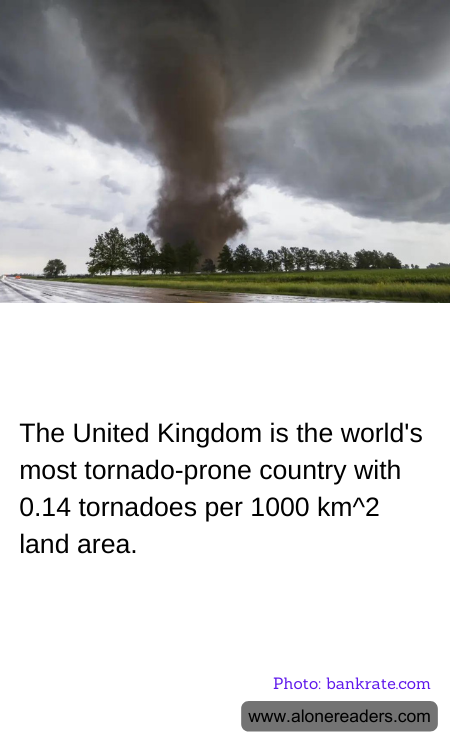
The United Kingdom, surprisingly, holds the title for being the world's most tornado-prone country per land area, with a rate of 0.14 tornadoes per 1,000 square kilometers. This statistic may come as a shock to many, as the UK does not typically conjure images of severe weather in the same way that areas like Tornado Alley in the United States do. However, the tornadoes experienced in the UK are generally much weaker and less destructive than their US counterparts.
Tornadoes in the UK are mostly small and short-lived, but they are not uncommon. The majority of these weather events are classified as F0 or F1 on the Fujita scale, which means they are unlikely to cause significant damage. The peak season for tornadoes in the UK is from May through October, with an emphasis in the late summer months when the contrast between atmospheric temperatures can be more pronounced.
Despite their relatively low intensity, these tornadoes can still cause localized damage and are a fascinating aspect of the UK's climate. Researchers and meteorologists in the UK study patterns and impacts of these tornadoes to better understand their nature and to improve warning systems that can help mitigate their effects. Their work is crucial, especially as climate change models predict possible changes in the patterns and frequency of severe weather events.
Understanding and preparing for tornado occurrences, even if minor, is a significant aspect of disaster preparedness and can help prevent damage and save lives. For residents and authorities in the UK, continuing education on tornado safety and awareness remains a priority, ensuring that the curiosity surrounding the UK's status as a tornado hotspot does not translate into complacency regarding the potential risks these natural phenomena can pose.
