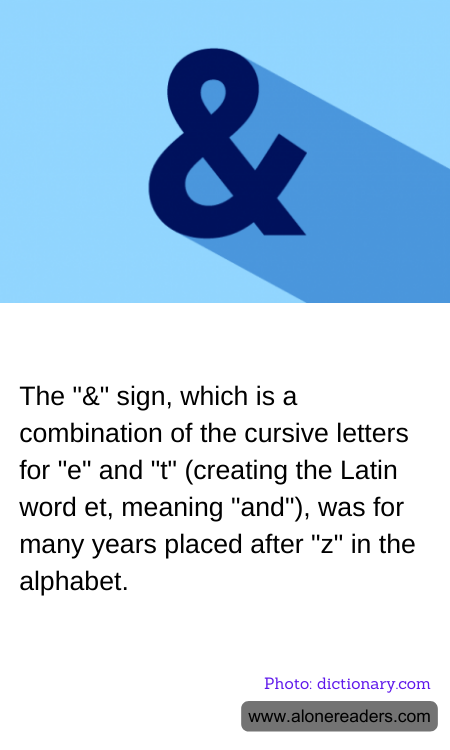
The ampersand symbol, "&", is a ligature combining the cursive letters "e" and "t". This combination represents the Latin word "et", which translates to "and" in English. Its fascinating evolution and integration into the English language showcase the fluid nature of written symbols over time. Historically, school children reciting the alphabet would conclude with the "&" sign, traditionally pronounced as "and". It was almost considered an additional letter at the end of the alphabet, which conveys its significant role in both commercial and everyday writing.
The use of the ampersand dates back to the 1st century AD when Roman scribes wrote in cursive. They frequently connected letters, and the et-ligature was particularly common due to the frequency of the word it represented. Over time, the symbol became more stylized and uniform, emerging distinctively as the ampersand in the early 19th century.
Incorporating the ampersand in the Latin script did more than streamline writing—it also influenced typography and design, evident today in various fonts and logos that utilize the character for visual appeal and compactness. Beyond its functionality, the ampersand has become a visual representation of connection and cohesiveness in cultural and commercial realms.
However, in the modern English alphabet, "&" no longer follows "z". Despite this, it remains a powerful symbol used to express the concept of "togetherness" and "connection", whether in literature, branding, or art. The longevity and versatility of the ampersand remind us of how age-old practices can persevere and still hold modern relevance, adapting comfortably to the pace and demands of contemporary communication. These usage patterns highlight an enduring legacy of linguistic convenience that has transcended centuries, adapting to the needs and styles of each new era.
