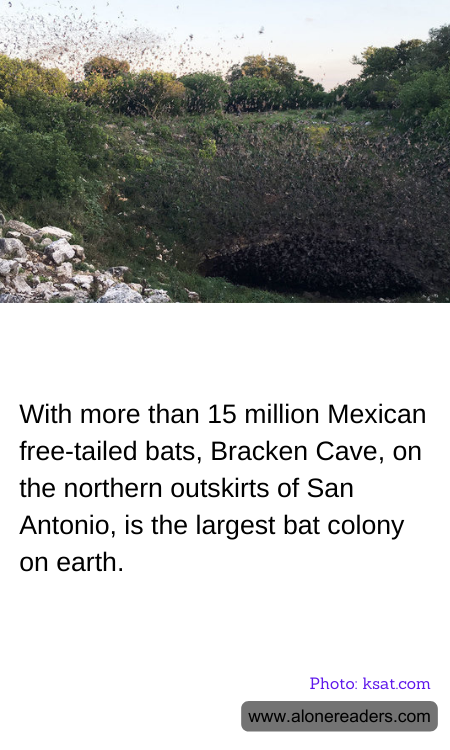
Located just outside San Antonio, Texas, Bracken Cave is home to the world's largest colony of bats, specifically the Mexican free-tailed bats. This remarkable natural wonder hosts over 15 million bats, making it a crucial hub for one of nature's most misunderstood creatures. The Mexican free-tailed bat, known scientifically as Tadarida brasiliensis, plays a significant role in controlling agricultural pests and maintaining healthy ecosystems. Each night from March through October, these bats emerge from the cave at dusk in a spectacular display, forming a dense cloud as they search for insects to feed on.
The cave itself is owned and protected by Bat Conservation International, an organization dedicated to the preservation of bats and their habitats. The conservation efforts are critical because bats, including the Mexican free-tailed, face numerous threats including habitat loss, pesticide exposure, and disturbances during their sensitive roosting periods. Bracken Cave and its surrounding environment are not only crucial for the bats’ survival during the maternity season when females give birth to their pups but also provide a vital shelter for hibernation and protection from predators.
The ecological importance of the Bracken Cave bat colony extends beyond just pest control. The bats play a role in pollination and seed dissemination, contributing to plant diversity and health in the region. Moreover, the guano (bat droppings) produced by the mass colony is a rich fertilizer that benefits the local soil, enhancing plant growth and contributing to the robustness of the local ecology.
Visiting Bracken Cave is a controlled activity, managed to minimize human impact on the bat colony. Tours are offered by Bat Conservation International, providing an incredible opportunity for education and direct experience of this natural spectacle. Attendees learn not only about the bats' life cycle and ecological role but also about the ongoing conservation efforts vital for their continued survival.
The phenomenon at Bracken Cave serves as a poignant reminder of the delicate balance within ecosystems and the interconnectedness of species. It underscores the importance of conservation and the responsible stewardship of our natural resources, ensuring that future generations may also witness the awe-inspiring emergence of the bats of Bracken Cave. The site exemplifies how targeted conservation actions can protect and sustain vital wildlife populations and their natural habitats, teaching us the value of coexistence with nature’s various forms.
