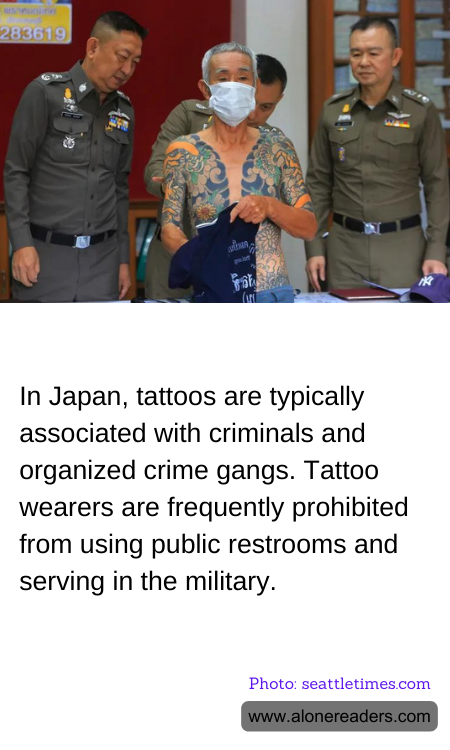
In Japan, tattoos have long held a complex and often negative connotation, deeply intertwined with the country’s cultural history and social norms. Historically, tattoos in Japan were used as a form of punishment for criminals, a practice that began in the early 17th century. This method of punishment, known as 'irezumi kei', transformed tattoos into a symbol of criminality, rather than an art form or personal expression.
The stigma surrounding tattoos intensified with the rise of organized crime groups, known as the Yakuza, in the 20th century. Members of these gangs adopted full-body tattoos as a mark of their loyalty and a symbol of their exclusion from mainstream society. This association between tattoos and the Yakuza strengthened the perception of tattoos as indicators of criminality and deviance. As a result, individuals bearing tattoos are often assumed to have links with criminal elements, affecting their social acceptance and access to certain public amenities and career paths.
This cultural perspective has led to significant social implications for individuals with tattoos. For instance, those sporting tattoos are often barred from public baths, swimming pools, gyms, and hot springs, as these places actively seek to distance themselves from the criminal undertones associated with tattoos. The discrimination extends to various public and private sectors, including restrictions in employment opportunities. Individuals with visible tattoos may find it difficult to secure employment in certain industries, such as the service industry or public-facing roles, where maintaining a specific image is crucial.
Similarly, the Self-Defense Forces of Japan have stringent rules against tattoos. Prospective recruits must undergo a thorough screening process, where visible tattoos can be grounds for disqualification. The military views tattoos as potentially undermining the discipline and uniformity required among its ranks.
Despite these challenges, perceptions of tattoos in Japan are slowly evolving, particularly among the younger generation and under the influence of global culture. Tattoos are increasingly seen as a form of personal expression and art. The growing popularity of tattoo conventions and the presence of internationally recognized Japanese tattoo artists, who blend traditional techniques with modern aesthetics, contribute to a gradual shift in attitudes.
Nevertheless, the transition is slow and the stigma remains pervasive, illustrating the complex interplay between traditional values and contemporary influences in Japan's social fabric. This enduring stigma shapes not only the personal lives of those with tattoos but also reflects broader themes of conformity and social harmony that are central to Japanese culture. As society evolves, it will be interesting to observe how these traditional views will adapt to an increasingly globalized world.
