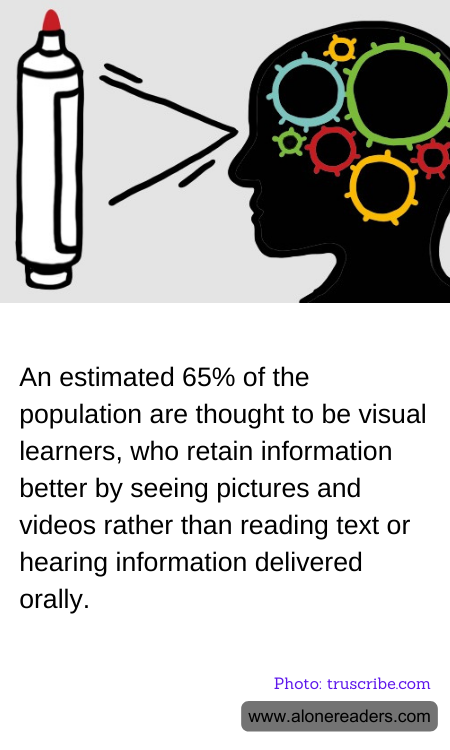
Visual learning is a powerful tool that resonates with a large portion of the population. Approximately 65% of people are categorized as visual learners, indicating that they grasp and retain information more effectively when it is presented through images, diagrams, and videos. This preference for visual over textual or auditory learning can significantly influence how education systems and workplace training programs are designed.
Visual learners benefit from a variety of strategies that cater to their learning preferences. For instance, in educational settings, instructors can enhance learning experiences by incorporating multimedia presentations, infographics, and illustrated handouts. Educational videos are particularly impactful because they combine both visual and auditory elements, thereby facilitating a deeper understanding and longer retention.
In the digital era, the affinity for visual learning can also be seen in the popularity of video-based platforms like YouTube, and social media applications such as Instagram and Pinterest, which allow users to learn through highly visual content. Furthermore, tools such as virtual reality (VR) and augmented reality (AR) are revolutionizing the way visual learners interact with information, offering immersive experiences that were not possible before.
The effectiveness of visual learning also extends to the professional world, where businesses are increasingly employing visual aids in training materials and presentations. Charts, graphs, and videos can communicate complex data in a straightforward and engaging way, enhancing comprehension and efficiency in the workplace.
Overall, understanding and utilizing visual learning strategies can play a critical role in both educational and professional environments, making information accessible and appealing to a majority of the population. As technology continues to evolve, the potential for new visual learning tools promises even greater opportunities for innovation in teaching and training methodologies.
