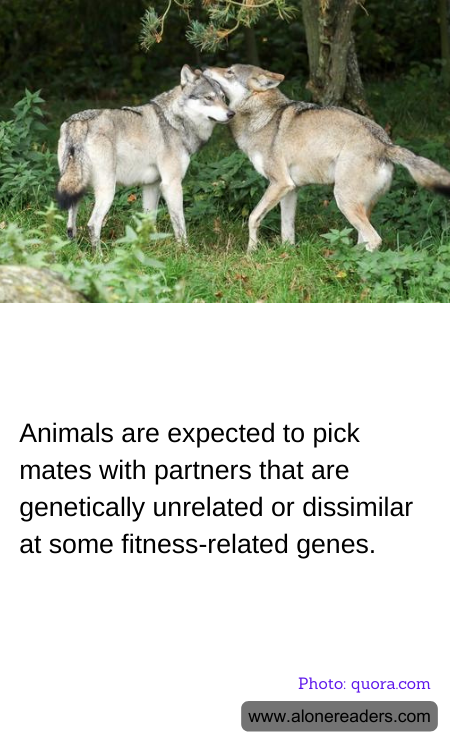
In the animal kingdom, the strategic selection of mates is crucial for the survival and health of offspring. One key factor that influences mate selection is genetic diversity. Animals tend to choose mates that are genetically unrelated or dissimilar, particularly regarding genes that affect fitness and survival. This behavior, known as disassortative or negative assortative mating, enhances genetic diversity, which can lead to healthier and more resilient offspring.
Genetic diversity is particularly vital when it comes to the immune system. The major histocompatibility complex (MHC), a group of genes that play a significant role in the immune response, is often a focal point in studies of mate selection. MHC genes help determine an individual’s odor via bodily secretions, which can be detected by potential mates. Animals are often attracted to mates that possess MHC alleles different from their own, a preference that likely helps in the avoidance of inbreeding and enhances the immune capabilities of future generations.
This preference for genetic dissimilarity in mates has been observed across a range of species, from mammals to birds to fish. For example, female mice are known to prefer males with MHC genes most dissimilar to their own, potentially because this choice enhances the survival of their offspring by boosting the immune system. Similarly, some bird species are also believed to use MHC diversity as a criterion in mate selection to ensure better disease resistance and survival prospects for their progeny.
Moreover, the benefits of selecting genetically dissimilar mates extend beyond improving the immune system. Offspring with greater genetic diversity often exhibit improved overall fitness, including better growth rate, survival, fertility, and ability to cope with stressors in their environment. For instance, in Atlantic salmon, evidence suggests that offspring from genetically dissimilar parents are more likely to survive to adulthood compared to those from more genetically similar pairings.
However, the mechanisms and sensory cues involved in discerning genetic compatibility vary widely among species, involving complex behaviors and biochemical signals. While odor is a common method among many vertebrates, other species might use visual cues or behavioral displays to assess genetic qualities.
Ultimately, the drive to select a genetically suitable mate is rooted in the biological imperative to ensure the longevity and success of one's lineage. By opting for partners with distinct genetic backgrounds, animals contribute to the genetic variability of the population, which can lead to better adaptation and survival against environmental changes and potential threats. By understanding these patterns and mechanisms in animals, researchers can gain insights into human mate selection and the underlying evolutionary pressures that shape our own reproductive decisions.
