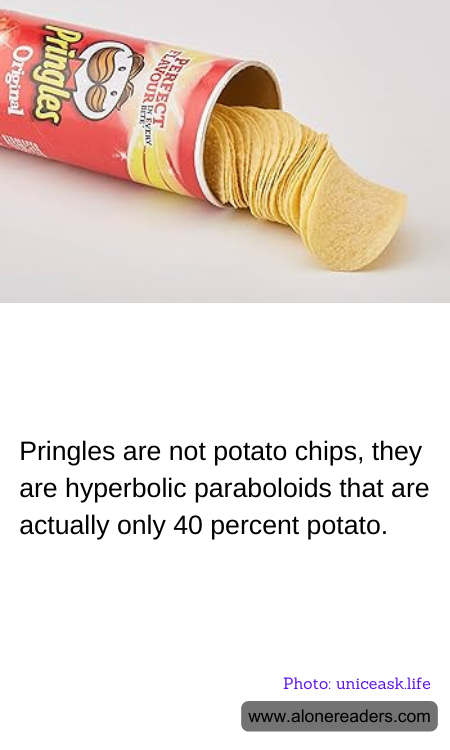
Pringles, the popular snack enjoyed by millions worldwide, are not your typical potato chips. Unlike traditional chips that are sliced from potatoes and fried, Pringles are made from a dough-like mixture that includes potato flakes, cornstarch, and rice flour among other ingredients. This concoction accounts for about 40 percent of the product's composition, making them less potato-heavy than one might assume.
The distinctive shape of Pringles sets them apart from other snacks. Each piece is a hyperbolic paraboloid, a unique geometric form that is curved both inwards and outwards. This not only makes them visually appealing but also optimizes their packing efficiency. The uniform shape allows them to be stacked neatly in their iconic cylindrical cans, reducing the risk of damage during transport and providing a satisfying user experience.
The creation of Pringles was a feat of engineering and culinary skill. The shape of the chip was precisely engineered to ensure that it could be made and packaged reliably while still offering a pleasant texture and crunch. The use of a mold in production allows every Pringle to be exactly the same shape and size, which is nearly impossible with traditional potato chips.
Despite their low potato content and high level of processing, Pringles have carved out a significant niche in the snack market. Their unique shape and variety of flavors appeal to those looking for a uniform and less greasy alternative to conventional chips. Moreover, the resealable packaging helps maintain freshness, making them an ideal snack for travel or for enjoying at home.
The understanding that Pringles are not typical potato chips but rather a carefully designed product with its own distinctive appeal and characteristics may enhance your snacking experience. Whether you revel in the crisp uniformity or the technical ingenuity, Pringles continue to offer a fascinating example of how food innovation can lead to a product beloved around the globe.
