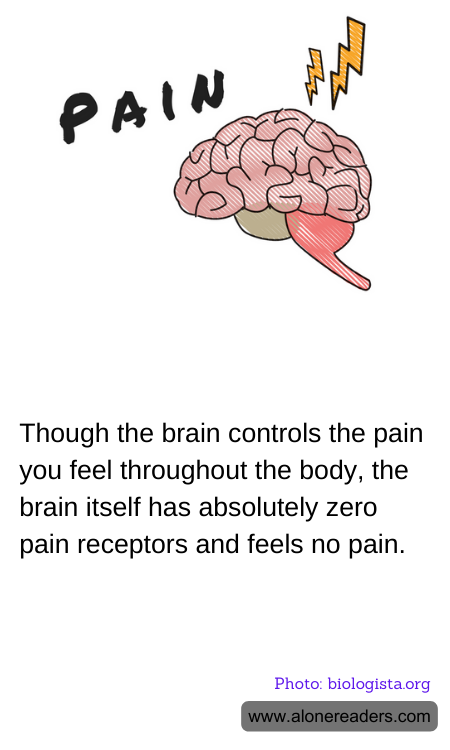
The phenomenon of pain is a crucial biological function, alerting the body to potential harm and encouraging protective actions. Pain receptors, also known as nociceptors, are present throughout the body and are responsible for detecting pain caused by physical, chemical, or thermal stimuli. However, remarkably, the brain itself does not contain any nociceptors and thus cannot feel pain. This lack of pain receptors in the brain raises intriguing questions about how and why we experience pain.
The brain acts as the central command center, processing signals from pain receptors distributed throughout the body. When you cut your finger or burn your hand, nociceptors send pain signals through nerves to the spinal cord and then to the brain. The brain then interprets these signals and reacts accordingly, perhaps causing you to wince, cry out, or pull away from the pain source. However, if the brain itself is subjected to manipulation—as might occur during brain surgery—patients do not feel pain from the brain tissue itself. Surgeons can perform brain surgeries with the patient awake, using only local anesthetic to numb the scalp before making an incision. This allows doctors to interact with patients and monitor their cognitive functions in real-time, ensuring vital areas of the brain are preserved.
The absence of pain receptors in the brain itself is advantageous during these surgical procedures, as it helps to assess and protect critical areas without causing the patient undue discomfort. However, the brain's inability to feel pain does not mean it lacks sensitivity altogether. The brain is enveloped by several layers of protective membranes known as meninges, which do have pain receptors. Conditions such as meningitis or subarachnoid hemorrhage can cause excruciating headaches due to inflammation or irritation of these membranes.
Moreover, headaches, one of the most common types of pain experienced, can at times seem like a paradox since the brain itself feels no pain. These are typically caused by the dilation or constriction of blood vessels in the brain or tension in muscles and nerves of the neck and head, stimulating the pain receptors contained within these structures.
Understanding that the brain feels no pain yet plays a pivotal role in the perception and processing of pain underscores the complex nature of this organ. Neurological research continues to explore how pain is mapped in the specific regions of the brain and how this intricate system can be modified to treat chronic pain conditions, offering insights into both the physiological and psychological dimensions of pain management.
