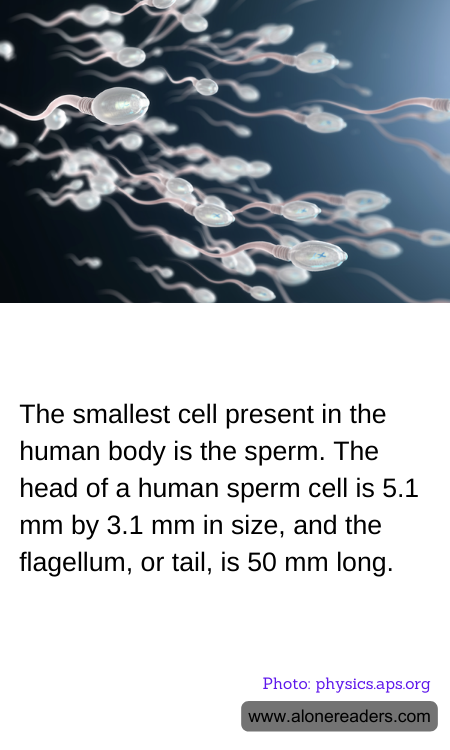
The human body is an intricate network of cells, each specialized to perform specific functions. One of the smallest and most unique types of cells in the human body is the sperm cell. Often overlooked in terms of its physical dimensions due to its pivotal biological role, the sperm cell is a marvel of biological engineering.
A sperm cell, also known as spermatozoon, is typically composed of two main parts: the head and the flagellum, or tail. The head of a sperm cell measures approximately 5.1 micrometers (μm) in length and 3.1 micrometers in width. Although miniscule when compared to many other cells, the head of the sperm is critically important as it houses the nucleus, which contains half of the genetic material (DNA) necessary to form a new human being.
Attached to the head is the flagellum, which significantly elongates the total length of the sperm to about 50 micrometers. The flagellum acts as a propeller, driving the sperm to swim through the female reproductive tract toward the egg. This mobility is crucial for successful fertilization, as the sperm must navigate through a challenging environment to reach and penetrate the egg.
Despite its small size, the complexity of the sperm cell is immense. Its design is perfectly suited for its function. The streamlined shape of the head and the powerful propulsion provided by the flagellum are key to its role in reproduction. Moreover, the sperm cell's journey and the processes of fertilization highlight the precision and complexity of human reproductive biology.
In essence, the sperm cell, while being the smallest cell in the human body, underscores a vital biological principle: that form and function are intricately linked, with size being finely tuned to meet specific biological purposes. This tiny cell is a powerhouse in the quest for life, carrying the genetic blueprint of human heritage and potential. It serves as a vivid example of nature's ingenuity, demonstrating that even the smallest elements can have immense importance in the continuity and propagation of life.
