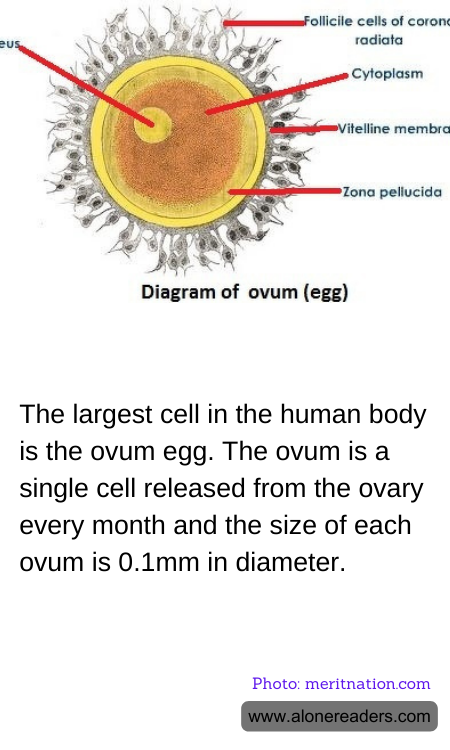
The largest cell in the human body, the ovum, or egg cell, presents a fascinating example of human biology's uniqueness. Unlike most cells, the ovum is visible to the naked eye, although barely, with a diameter of about 0.1 millimeters. It is produced once a month during a woman's reproductive years in a process governed by complex hormonal changes. This process, known as ovulation, involves the release of an ovum from the ovaries into the fallopian tubes, where it may meet sperm and become fertilized, leading to pregnancy.
The size of the ovum is an evolutionary adaptation that enhances its ability to be fertilized by sperm. Being the largest cell, it contains substantial amounts of cytoplasm, nutrients, and mitochondria, which are critical for the cell’s development after fertilization. This size advantage is crucial, particularly in the early stages of pregnancy, as it supports the initial growth processes of the zygote, even before it can implant in the uterus and draw maternal resources.
Moreover, the ovum's large size relative to sperm plays a significant role in reproductive biology. It not only enables easier location and union of the sperm and egg but also allows for the selective entry of sperm, ensuring that only sperm with the most vigor and best chance of successfully fertilizing the egg complete the journey through the viscous layers that surround the ovum. This selective permeability is vital for the genetic quality and viability of the resulting embryo.
In essence, while it may be just a dot visible to the human eye, the ovum's impact on reproduction and evolutionary biology is profound, influencing everything from the mechanics of fertilization to genetic diversity and the very beginnings of human life. Its intricate design and substantial size are perfect examples of nature's precision in the complex dance of creating life.
