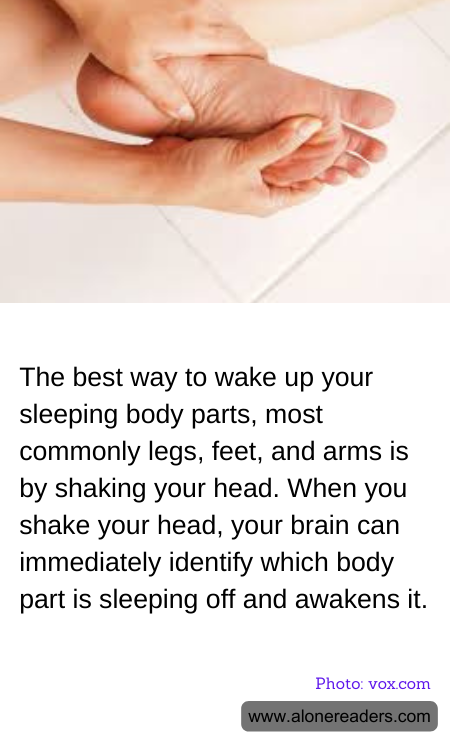
Waking up a sleeping limb—a common and often uncomfortable experience referred to as having a limb 'fall asleep'—is usually caused by pressure on the nerves or reduced blood supply to the area. Although the method of shaking your head to awaken a sleeping body part may sound unusual and could be seen as a novel suggestion, it's not directly supported by scientific reason or neurological principles.
The sensation of a limb falling asleep is technically known as paresthesia. It often manifests as a feeling of pins and needles or a tingling numbness. This occurs when sustained pressure is placed on a nerve or nerves, such as sitting with your legs crossed for a prolonged period or sleeping on your arm. When the pressure is relieved, normal sensation returns, typically accompanied by tingling as nerve function is restored.
If you experience paresthesia, the most effective and commonly recommended way to restore normal sensation and blood flow is actually to move or massage the affected limb. Gentle movements and massage help stimulate circulation, and as blood flow increases, the uncomfortable sensations usually diminish. Shaking or repositioning the limb will prompt the nerves to begin firing again, accelerating the return of sensation.
Shaking your head when a body part falls asleep does not have a direct correlation with alleviating the numbness in limbs. Such an action might heighten your alertness or shift your focus, but does not influence the physiological processes involved in paresthesia in your limbs. It's always beneficial to understand and directly address the specific issue rather than relying on unrelated body movements.
If numbness or the sensation of limbs falling asleep occurs frequently or without obvious cause, it could indicate underlying health issues, such as nerve damage or circulatory problems. In such cases, consulting a healthcare professional for an accurate diagnosis and appropriate management is recommended. Meanwhile, ensuring regular movement, avoiding sitting or lying down in the same position for too long, and maintaining a healthy lifestyle can help minimize occurrences of paresthesia.
