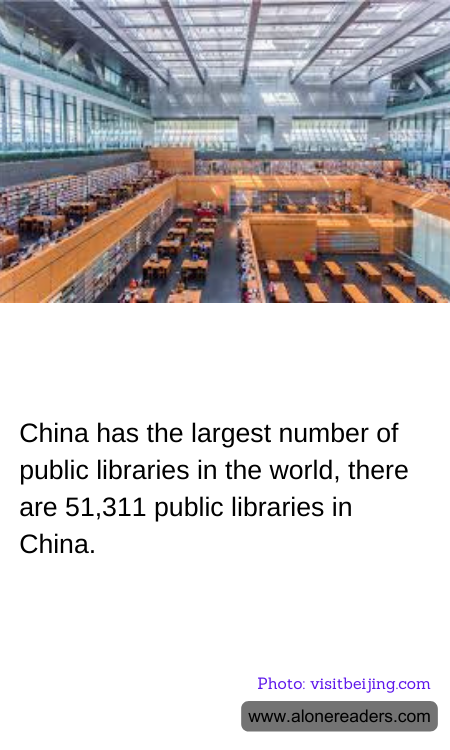
China's staggering number of public libraries highlights a significant commitment to educational resources and literacy within the nation. With 51,311 public libraries scattered throughout the country, China leads the world in making literary resources accessible to its citizens. This broad network supports not only education through provision of books and digital media but also serves as community hubs for learning and cultural exchange.
The extensive library system in China can be traced back to the government's focused efforts on educational reforms and cultural development. Over the last few decades, the Chinese government has recognized the integral role that libraries play in educating the populace and promoting innovation through widespread knowledge dissemination. As a result, substantial investments have been made in expanding the infrastructure of libraries across rural and urban areas to ensure every citizen has access to a wealth and breadth of information.
Public libraries in China are more than just places to borrow books. They are also centers for community gatherings, cultural events, and educational workshops, which help to foster a sense of community among residents. Additionally, many libraries have embraced technology, providing access to digital books and resources, internet services, and modern reading devices that cater to the evolving needs of the public. This adaptation to digital transformation is pivotal in staying relevant in the rapidly advancing technological landscape.
Moreover, Chinese public libraries often collaborate with schools, universities, and other educational institutions to facilitate a cohesive learning environment. This partnership helps in nurturing a literate and educated populace equipped with the necessary skills to thrive in the global economy. The libraries also play a crucial role in supporting lifelong learning and continuous personal and professional development.
In sum, the vast number of libraries across China not only reflects the country's rich literary tradition and commitment to education but also emphasizes the role of libraries in the broader scope of societal development and cultural preservation. As these libraries continue to adapt and evolve, they remain essential pillars of the community promoting the educational advancement and personal growth of individuals across China.
