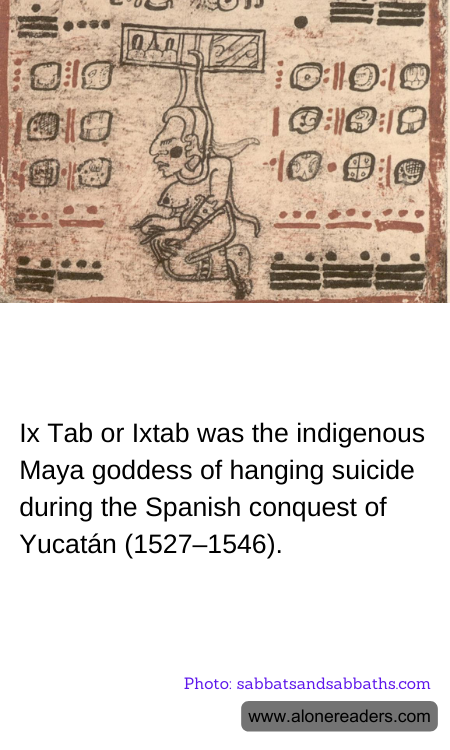
Ixtab, known in the pantheon of Maya deities, is a figure shrouded in both mystery and melancholy. She was revered by the indigenous Maya people as the goddess of suicide, specifically, suicides committed by hanging. Despite the unsettling nature of her domain, Ixtab was not viewed in the negative light often associated with death and suicide in many modern cultures. Instead, she was considered a compassionate deity who provided a safe passage to the afterlife for those who took their own lives.
During the tumultuous period of the Spanish conquest of Yucatán from 1527 to 1546, the traditional beliefs and gods of the Maya came under immense pressure. The indigenous population faced brutal exploitation and a formidable cultural upheaval as Spanish conquerors attempted to impose Christianity, dismissing native religions as paganism. However, Ixtab remained a significant figure among the Maya people, embodying a complex theological concept that differentiated between the types of death and their spiritual consequences.
According to Maya belief, individuals who died by suicide, particularly by hanging, were afforded a special place in the afterlife. Unlike the typical grim view of suicide in many cultures, which often stems from notions of moral or religious wrongdoing, the Maya believed that those who died in this manner were gripped by circumstances beyond their control. Ixtab was seen as a merciful goddess who guided these souls directly to a paradise, bypassing the trials and tribulations that other spirits might face.
The iconography of Ixtab is rare yet profound. Typically, she is depicted in surviving codices as a woman with a rope around her neck, signifying her association with hanging. This depiction underscores the inevitability and acceptance of her role, serving as a reminder of the duality of existence—where death could also lead to rejuvenation and peace in another world. It illustrates the nuanced understanding of death by the Maya, a concept intertwined deeply with their cosmology and rituals.
Studying Ixtab and her place within the Maya pantheon offers critical insights into how indigenous cultures understood and coped with the darker aspects of human existence, as well as the challenges faced during the colonial period. Her presence reflects a compassionate acknowledgment of despair and mental anguish, providing a culturally unique perspective on suicide that contrasts starkly with the stigmas often found in other societies. Through figures like Ixtab, the Maya demonstrated a profound empathy and sophistication in their engagement with the existential realities of life and death.
