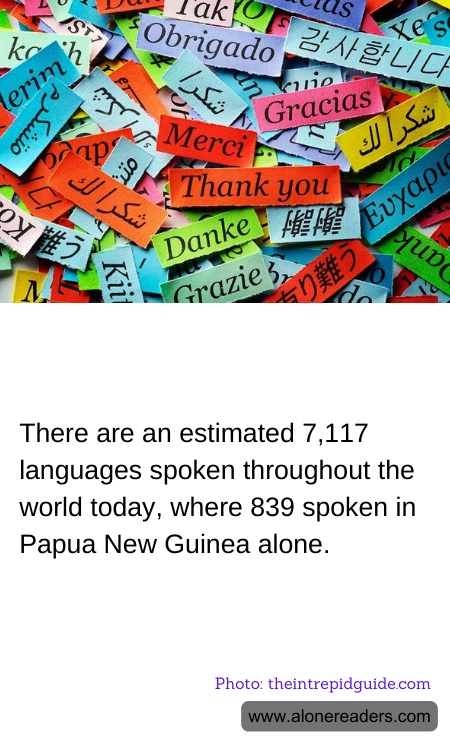
Language diversity is both fascinating and vital for cultural identity and preservation. Among the plethora of global languages, an estimated 7,117 distinct languages are spoken. This staggering number highlights the vast range of human linguistic expression and cultural heritage. Remarkably, Papua New Guinea stands out on the global stage with the highest density of languages spoken within its borders. This small Pacific nation alone boasts approximately 839 languages, making it the most linguistically diverse country in the world.
This diversity is rooted in the nation's complex tribal societies, each with its own distinct language. The languages vary widely in terms of their grammatical structures, vocabularies, and sounds. Many of these languages have very few speakers and are at risk of becoming extinct in the near future. As small communities modernize or face external pressures, there is a trend towards shifting to more dominant languages, such as Tok Pisin, English, or Hiri Motu, which are official languages of Papua New Guinea.
The high number of languages in such a concentrated area poses significant challenges for communication and administration but also provides unique opportunities for studying linguistic evolution, language structure, and the processes of language death and birth. Efforts are ongoing both within Papua New Guinea and internationally to preserve these languages through documentation, the creation of written forms, and educational programs.
The existence of such linguistic diversity is a powerful reminder of humanity’s adaptability and the nuanced ways in which communities use language to define their identity. It underscores the importance of languages as repositories of history, culture, and traditional knowledge, making them precious beyond the measure of speakers alone. As globalization continues, the preservation of these smaller languages helps contribute to the global mosaic of human culture, offering insights and perspectives that might otherwise be lost to the homogenizing effect of larger languages.
