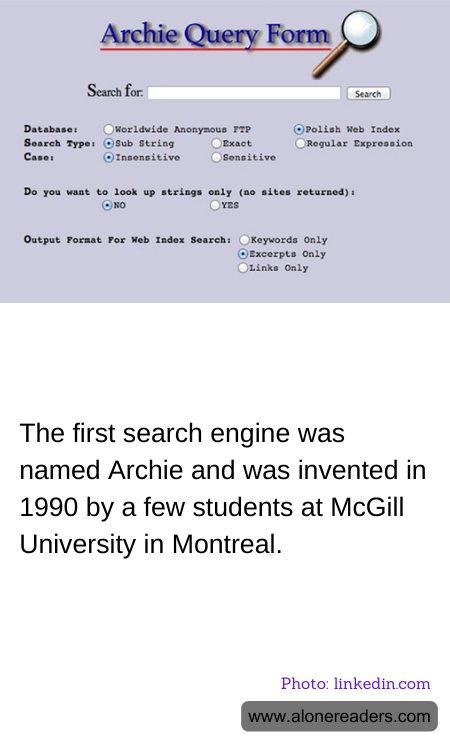
The advent of the internet brought with it a need for mechanisms to locate and retrieve information efficiently. The solution to this problem led to the development of the first search engine, Archie, in 1990. Created by Alan Emtage, a postgraduate student at McGill University in Montreal, Archie pioneered the fundamental concept of indexing available resources across multiple servers.
Archie, short for "archives" without the "v," was designed primarily to index computer files rather than webpage content. During its early deployment, the internet primarily consisted of FTP sites. Archie helped manage this voluminous data by creating a searchable database of file listings from these sites, which allowed users to locate specific files by name. It functionally operated through a series of commands that required user engagement via a more textual interface, without the hyperlinked, web-page interfaces typical of later search engines.
The development was seminal because it laid the groundwork for the complex web search engines we are accustomed to today, like Google, Bing, and Yahoo. Although limited in scope and technology by today’s standards, Archie's architecture provided a rudimentary framework that showed that automated Internet searches were feasible and useful. It opened up paths for subsequent search engines like Veronica and Jughead, which functioned similarly but used slightly different methods to catalog information on the nascent internet.
Importantly, Archie also demonstrated, early on, the necessity of developing more effective algorithms to handle the accelerating explosion of publicly available information. This issue continues to drive the evolution of search engines, which now employ advanced AI and machine learning algorithms to refine and personalize search results.
Understanding the history and development of Archie provides insight into the integral aspects of search abilities and the broader impacts on digital communication and information retrieval. It not only revolutionized discovering and accessing files across a fragmented set of servers but also set the stage for the kind of complex information retrieval systems that underpin today's internet.
