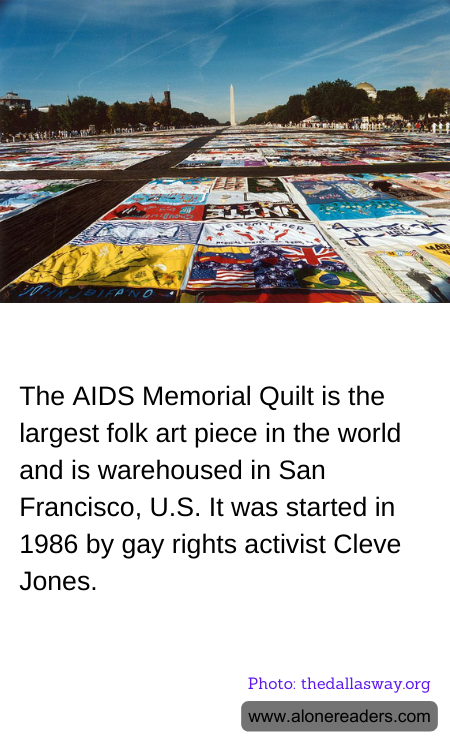
The AIDS Memorial Quilt, an expansive symbol of activism and remembrance, stands as the largest piece of folk art in the world, and it carries deep emotional and historical significance. It was initiated in 1986 by Cleve Jones, a prominent gay rights activist, in response to the devastating impact of the AIDS epidemic on the LGBTQ+ community during the 1980s. Each panel of the quilt commemorates the life of a person lost to AIDS, serving both as a poignant tribute and a potent tool for awareness and education.
The quilt was first displayed publicly on the National Mall in Washington, D.C., where it covered a substantial expanse with thousands of names inscribed on its panels. This powerful display brought immense attention to the severity of the epidemic, helping to humanize the many individuals who had died, often marginalized by society and ignored by political leaders of the time. The visual impact of the quilt brought an undeniable face to the numbers, urging greater funding and research into HIV/AIDS.
With each panel approximately the size of a typical grave, the quilt evokes a sense of immense loss while celebrating the lives of those who died, with decorations ranging from simple, heartfelt messages to elaborate, artistic expressions. As more panels were added, the quilt grew significantly, symbolizing the expanding awareness and remembrance of lives affected by AIDS.
Now warehoused in San Francisco, the quilt still serves as an educational tool and a means to raise funds for AIDS-related causes. It is periodically displayed in various communities and events across the nation, continually adding new panels to include recent victims of the disease, thereby ensuring that the memory of the AIDS epidemic and its impact remains vibrant and relevant. Each display of the quilt helps in advocating for policy change, providing support for those living with HIV, and keeping the history of the community's response to the epidemic alive.
The AIDS Memorial Quilt thus remains a poignant reminder of the power of community solidarity and the continuing fight against a disease that has claimed so many lives. It stands as a testament to collective artistic expression, community activism, and the personal stories of those who have been touched by the AIDS crisis. By stitching together loss, memory, activism, and art, the quilt weaves a rich tapestry of shared human experience, making it an enduring symbol of both grief and hope.
