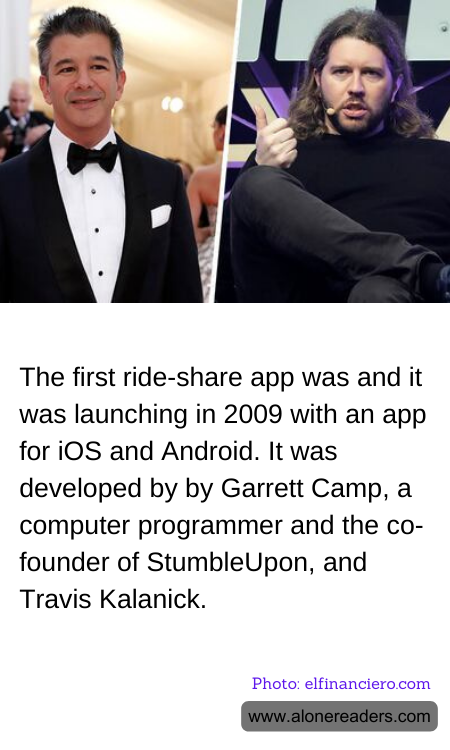
In 2009, the transportation industry was revolutionized by the introduction of the first ride-sharing app, developed by technology entrepreneurs Garrett Camp and Travis Kalanick. This app, known today simply as Uber, was initially launched on the iOS and Android platforms, catering to a broad audience right from the start.
Garrett Camp, who had previously co-founded StumbleUpon, conceived the idea of Uber out of personal necessity and frustration with traditional taxi services. Alongside Travis Kalanick, who later became the CEO, they developed a business model that would eventually transform the way people globally think about transportation. Uber's initial concept was relatively straightforward: to enable users to request a ride from nearby participating drivers with just a few taps on their smartphones.
The app was innovative in how it seamlessly connected riders to drivers, provided upfront fare estimates, and processed payments electronically. This level of convenience and efficiency in transportation services was previously unheard of. Additionally, Uber’s rating system for both drivers and passengers ensured a level of accountability and quality control, enhancing the user experience.
Uber's success soon inspired a wave of similar apps and services across different regions, leading to what can now be described as the 'Uberization' of the mobile service economy. The impact of Uber and other ride-sharing services is profound, influencing urban mobility patterns and sparking regulatory discussions around the world.
Despite facing significant challenges, including regulatory pushbacks and controversies related to safety and privacy concerns, Uber and its pioneering ride-sharing model have continued to evolve. The company has expanded its services to include food delivery and freight logistics, showcasing the versatility and potential of the platform-based service model initiated back in 2009. As cities grow increasingly congested and the societal shift towards convenience-based services continues, the influence of Uber’s innovative leap in 2009 persists, reshaping not just how people commute but how they interact with cities and technology at large.
