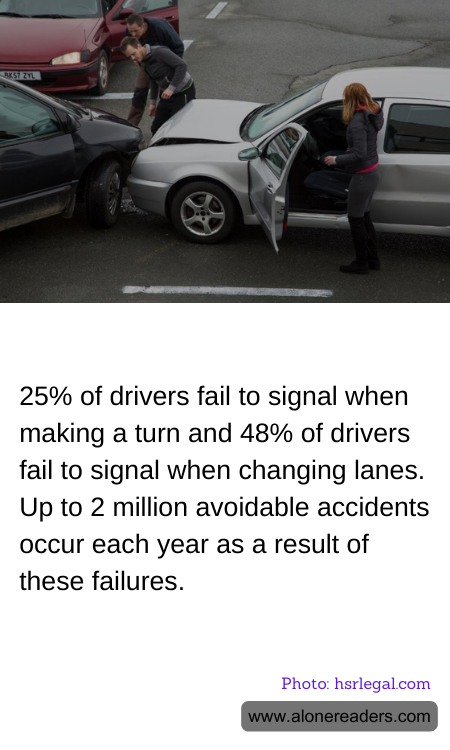
The act of signaling before making a turn or changing lanes is not just a legal requirement; it is a crucial element of road safety. Despite its significance, statistics reveal a concerning trend: 25% of drivers neglect to use their turn signals when making a turn, and an even more alarming 48% of drivers fail to signal when changing lanes. This widespread neglect of a basic safety measure leads to up to 2 million avoidable accidents each year, underscoring a significant public safety issue.
The failure to signal intentions on the road prevents other motorists and pedestrians from anticipating a driver’s actions, increasing the likelihood of collisions. This behavior might stem from a variety of factors including negligence, forgetfulness, or the mistaken belief that signaling is unnecessary in light traffic conditions. However, such assumptions can have dangerous consequences not only for the drivers themselves but also for others sharing the road.
Addressing this issue requires a multifaceted approach. Public awareness campaigns can play a key role in reminding drivers about the importance of using turn signals. Enhanced driver education, focusing on the dangers associated with not signaling, can help instill better driving habits, particularly among new drivers. Additionally, enforcement of traffic laws concerning turn signals by local authorities can deter drivers from omitting this critical step.
Technological advancements may also aid in reducing these types of accidents. For example, newer vehicle models are increasingly equipped with features like blind-spot detection systems and lane-keeping assists that can potentially compensate for some human errors. However, technology should not replace basic driving skills and etiquette which include the use of turn signals.
Ultimately, the responsibility lies with each individual driver to ensure they communicate their actions effectively on the road through proper signaling. This not only keeps them safe but also protects other road users, contributing to safer driving environments for everyone. By prioritizing this simple yet vital action, drivers can help reduce the number of preventable accidents and bring about a significant positive impact on road safety.
