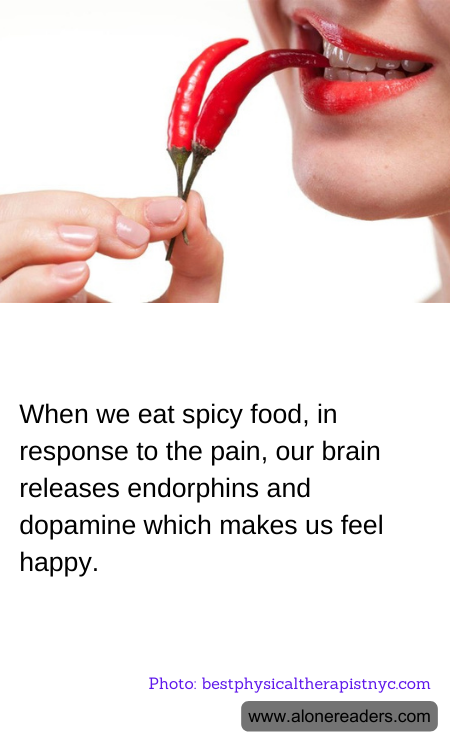
Eating spicy food is not just about challenging your taste buds; it can actually lead to a pleasurable psychological response. When we consume spicy dishes that contain ingredients like chili peppers, our bodies react to the burning sensation as if it were pain. This discomfort is principally due to capsaicin, the chemical responsible for the ‘hot’ taste. Capsaicin binds with pain receptors in the mouth, which are typically used to respond to physical heat, thus the brain receives ‘hot signals’, despite the actual temperature of the food.
This simulated sense of pain triggers the brain’s defense mechanisms. In response, the brain releases endorphins, which are natural painkillers produced by our bodies. Endorphins work by binding to the opioid receptors in the brain, reducing discomfort and promoting a sense of well-being. This is similar to the ‘runner’s high’ that is experienced during vigorous physical exertion. Additionally, the brain releases dopamine, another feel-good neurotransmitter that promotes pleasure and satisfaction. This release can create a mild euphoria or sense of happiness, often referred to as the ‘chili endorphin rush.’
The pleasurable sensations associated with spicy food might explain why it’s so popular, despite the pain. For many, the thrill of the burn followed by the rush of endorphins becomes a rewarding experience, encouraging them to eat spicy food again. It’s an interesting twist of human biology where the body transforms pain into pleasure, leading to enjoyment in what might otherwise be an uncomfortable experience.
Moreover, cultures that are accustomed to eating spicy food often start at a young age, which allows individuals to build up a tolerance over time. This not only decreases the intensity of the initial pain but also means that the pleasant after-effects are reached more quickly. People from these cultures might not experience the same level of pain as those who are not accustomed to spicy foods, thereby directly associating spicy tastes with the pleasurable responses without significant discomfort.
So, the next time you reach for that hot sauce or jalapeño, remember that the fiery kick isn’t just a test of your culinary bravery—it’s a route to a delightful neurochemical cocktail that lights up your brain’s reward centers. Whether it’s a dash of hot sauce on your breakfast or a spicy curry for dinner, the complex interplay of pain and pleasure makes eating spicy food a uniquely satisfying experience.
