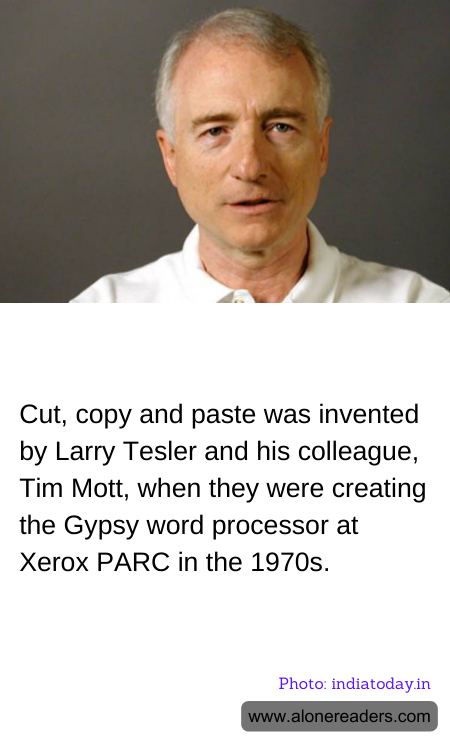
The invention of cut, copy, and paste functionalities, now integral to virtually all computer interfaces, represents a cornerstone in the development of modern computing. This revolutionary concept was developed by Larry Tesler and Tim Mott in the 1970s during their tenure at Xerox's Palo Alto Research Center (PARC), a facility famous for its pioneering work in the field of personal computing.
The story of this invention begins with the development of the Gypsy word processor at Xerox PARC. Tesler and Mott, who were focused on making computer systems more user-friendly, conceptualized a method that would simplify the process of editing text. Their main goal was to create a text editing system that could easily rearrange words, sentences, and paragraphs. This led to the creation of the "cut," "copy," and "paste" commands, which allowed users to remove text from one place, create a duplicate of it, or insert it into another without having to manually retype the information.
This system not only streamlined word processing but also laid foundational principles for user interface design. Tesler, particularly passionate about usability, adhered to a philosophy called "modeless computing," which proposed that software functions should not force users into specific modes of operation. This philosophy deeply influenced the design of the Gypsy word processor and also guided his later work.
The impact of Tesler and Mott's work became more apparent with the rise of personal computing in the 1980s. The introduction of the Apple Macintosh, which came equipped with a graphical user interface that included the cut, copy, and paste commands, marked a significant turning point in rendering these functionalities ubiquitous. The adoption of these commands across various operating systems and applications underscored their fundamental role in user-computer interaction.
Today, cut, copy, and paste commands are considered basic features, essential for everyday tasks such as word processing, data entry, and a plethora of other digital interactions. This invention exemplifies how thoughtful design and user-centered innovation can lead to features that shape the fundamental ways we interact with machines. As digital technologies continue to evolve, the historical significance and enduring utility of Tesler and Mott's invention serve as a reminder of the powerful impact that simple, intuitive design solutions can have on broadening technology's accessibility and efficiency.
