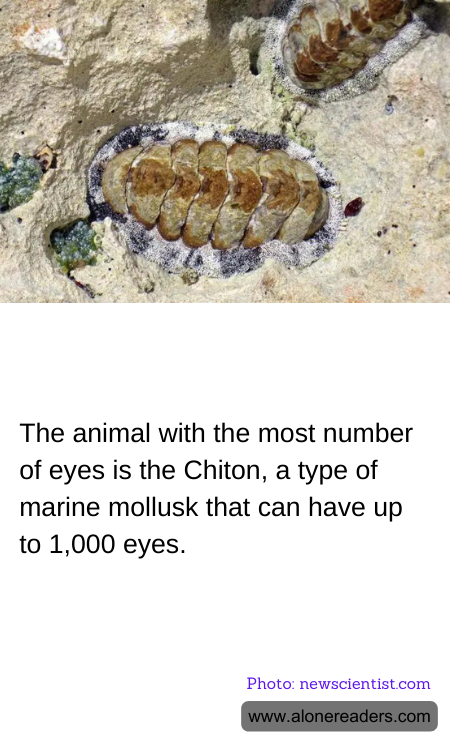
Chitons, a distinctive group of marine mollusks, hold a record in the animal kingdom for possessing an exceptionally high number of eyes—up to 1,000. These remarkable creatures, which have existed for over 400 million years, inhabit rocky coastlines across the globe. They are typically characterized by their unique oval-shaped bodies and protective shell composed of eight armored plates. What makes them even more fascinating is their visual capability, derived from hundreds of tiny eyes embedded in their sturdy shells.
The eyes of a chiton are built primarily from aragonite, a mineral form of calcium carbonate which is also the key component of their protective plates. These eyes, though minuscule and less complex than human eyes, are quite effective for their survival needs. Each eye consists of a simple lens and a layer of light-sensitive tissue. The arrangement allows chitons to detect changes in light and motion, enabling them to sense approaching predators or other threats.
Interestingly, despite having so many eyes, chitons do not see detailed images as humans do but can detect changes in light and shadow, which is sufficient for the detection of predators like fishes and sea birds. This type of vision is crucial for their survival, particularly because chitons are not fast movers. Their primary mode of defense is their hard shell, under which they can clamp down tightly against a rock surface.
Scientific investigations into chiton eyes have shown that when chitons lose their eyes due to damage or predation, they can regrow them, indicating a highly adaptive repair mechanism. This ability to regenerate lost or damaged eyes is a remarkable example of evolutionary adaptation and resilience.
Their unique anatomical and physiological traits make chitons a subject of interest not only for evolutionary biologists but also for material scientists and engineers. Understanding how chitons’ eyes are structured and function in such a robust shell could inspire new advancements in durable, bio-inspired optical materials. In a broader sense, chitons exemplify the incredible diversity of life forms on Earth and the varied mechanisms organisms have developed to interact with their environments.
