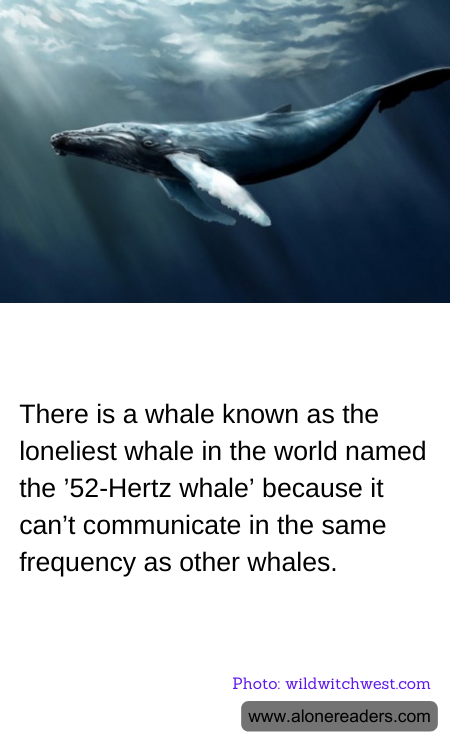
Imagine roaming the vast, deep oceans, calling out in a song unique only to you, and never receiving a reply. Such is the poignant story of the ’52-Hertz whale,' often dubbed as the "loneliest whale in the world." This creature, tracked primarily through its unique vocal signature, sings at a much higher frequency of 52 Hertz, unlike any other species of whale, which typically communicate at frequencies between 15 and 25 Hertz.
First detected in 1989 by a team using hydrophones (underwater microphones) employed by the U.S. Navy to track submarines, the whale’s existence sparked immense curiosity and empathy among scientists and the general public alike. The whale's calls, much like fingerprints are unique to humans, are distinct because of their frequency and the patterns they display, which do not match those of any known whale species.
Researchers speculate that the 52-Hertz whale might be a hybrid of a blue whale and another species, possibly contributing to its unique vocal output. Despite its unusual calls, there is no concrete evidence to suggest that its high-pitched songs hinder its ability to survive or reproduce, although it’s likely that other whales cannot understand or respond to its calls. This isolation, primarily in communication, leads to the whale's moniker as the loneliest whale.
The story of the 52-Hertz whale has not only piqued scientific interest but has also deeply resonated with the public, symbolizing universal themes of isolation, uniqueness, and the yearning to connect. Documentaries and research missions have been launched in efforts to locate and learn more about this mysterious creature, providing insights into not only this single animal's behaviors and migration patterns but also the broader oceanic world of whale communication and social structures.
This whale’s journey through solitude underscores a larger narrative about the diversity of life and the myriad ways creatures adapt to challenges. It also encourages a greater human connection with the fascinating, albeit often hidden, marine life thriving in our oceans – a reminder of the incredible mysteries that still lie unexplored in the vast blue depths.
