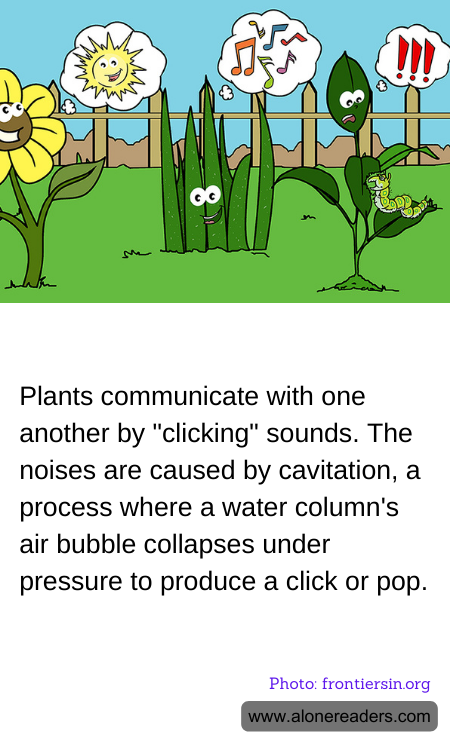
Plants are far more interactive than we might think. Recent studies have unearthed a fascinating mode of plant communication that occurs through subtle clicking sounds. This surprising find changes our perspective, showing that plants may not be as silent or passive as traditionally believed.
These clicking sounds are the result of a process known as cavitation. Cavitation occurs when the water transport system of a plant—a network of tubes called the xylem that transfers water and nutrients from the roots to the leaves—faces a sudden drop in water pressure. This drop can create small air bubbles or voids in the water column. As these bubbles collapse, they emit a distinct click or popping sound. This is not just a random occurrence but a significant event that can be detrimental to the plant since it disrupts the flow of water and nutrients.
Interestingly, these clicks are not merely by-products of mechanical stress within the plant's vascular system; they potentially serve a communicative function. Research suggests that other plants can detect these sounds through their own roots, and, in turn, respond adaptively, possibly ramping up their own internal defense mechanisms in anticipation of environmental stresses that could cause similar problems for them.
This discovery of plant acoustics opens up a new field of bioacoustics in botany and could reshape our understanding of plant behavior and ecology. It challenges the notion that communication and the ability to perceive environmental cues are traits only of animals. By understanding how plants communicate and respond to their surroundings, scientists can enhance agricultural practices and even develop new methods to monitor crop and forest health more effectively.
Moreover, the study of how plants react and communicate through sounds may lead to environmentally-friendly solutions to manage crops and forests under stress. This could be particularly useful for developing strategies to cope with the impacts of climate change on plant ecosystems. Thus, the clicking sounds of cavitation not only unravel a new dimension to plant life but also open up potential applications in sustainability and conservation efforts.
