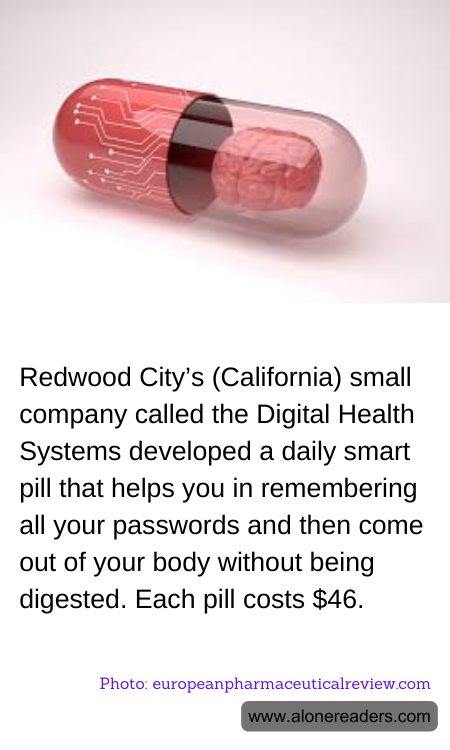
In the heart of California's Silicon Valley, an innovative startup, Digital Health Systems, is revolutionizing the way we manage our digital security. Based in Redwood City, this small company has developed a groundbreaking solution—a daily smart pill designed to help individuals remember all their passwords. The unique aspect of this technology is that the pill passes through the body without being digested, therefore maintaining its effectiveness and ensuring privacy and security.
The concept of a smart pill is not entirely new, but Digital Health's application of this technology is certainly pioneering. The pill works by utilizing a small biocompatible chip that, once ingested, activates and communicates with a secure app installed on the user’s smartphone or computer. The chip temporarily stores complex passwords and other sensitive data securely, using advanced encryption methods. Users can access their passwords seamlessly and securely during the pill’s active period, which lasts for a day until the pill exits the body naturally.
Each pill costs $46, a price point that reflects the advanced technology and research invested in developing this unique security product. While the cost may seem high for a single-use item, it addresses a significant issue in the digital age: password fatigue and the security risks associated with managing numerous passwords.
The implications of Digital Health Systems’ smart pill extend beyond individual convenience. For businesses, it represents a novel approach to securing employee access to sensitive systems without the risks of password reuse or theft. Additionally, as cyber threats become more sophisticated, having a secure and unobtrusive method of password management could become an essential tool in digital security strategies.
However, the introduction of such technology also raises questions about privacy and long-term health effects, even though the company assures that the pill’s components are safe and FDA-approved. Consumers and health experts alike will likely scrutinize the impact of regularly consuming a digital device, even one designed to pass through the body harmlessly.
As Digital Health Systems continues to refine and promote their smart pill, the broader acceptance and adoption of such technology will depend on balancing innovation with user safety and privacy concerns. If successful, this smart pill could herald a new era in personal cybersecurity, providing a secure, efficient way to manage digital access and protect personal and corporate data.
