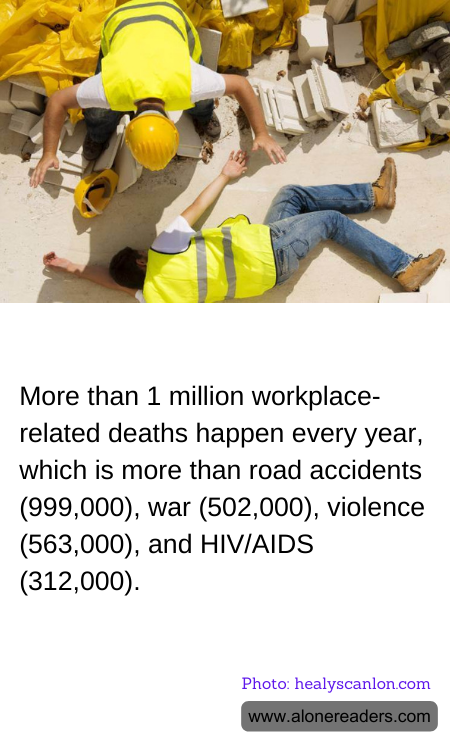
Workplace-related deaths are a grim reality that surpasses the fatalities from many other high-profile causes. With over 1 million fatalities each year, the significance of occupational health and safety cannot be understated. This staggering number eclipses deaths from road accidents, which claim 999,000 lives annually, war-related deaths at 502,000, violence at 563,000, and even HIV/AIDS, which accounts for 312,000 deaths per year.
The alarming rate of workplace fatalities highlights a critical need for improved safety protocols and regulations across industries globally. These deaths range from accidents due to machinery, falls, exposure to harmful substances, and even stress-induced health issues leading to severe conditions or fatal incidents. The diversity in the nature of these accidents indicates that both physical and mental health are severely compromised in unsafe working environments.
Addressing this crisis requires a multifaceted approach. Firstly, there is a pressing need for stringent enforcement of existing safety regulations. Compliance should be non-negotiable, with severe repercussions for violations to deter negligence. Additionally, there is a need for continuous updating and improvement of safety standards to keep pace with new technologies and practices in the workplace.
Education and training are also paramount. Workers need to be properly educated about the risks associated with their jobs and trained in the best practices to mitigate these risks. Ongoing training initiatives should be a staple in the work environment, ensuring that all employees are aware of how to handle emergency situations and avoid hazardous exposures.
Moreover, there needs to be a cultural shift in the way workplace health and safety are perceived. Rather than viewing safety measures as a financial burden or a checkbox to tick, companies should consider these measures as integral to the overall well-being of their employees and critical to the sustainability of their operations. Encouraging a culture where safety protocols are respected and where employees feel empowered to voice concerns about unsafe practices is essential.
Ultimately, reducing the number of workplace fatalities is not only about meeting legal requirements but also about valuing human life. Employers, policymakers, and workers each have a role to play in forging environments where safety is embedded in the fabric of workplace culture. Fostering safe workplaces is a collective effort and a moral imperative that we cannot afford to ignore.
