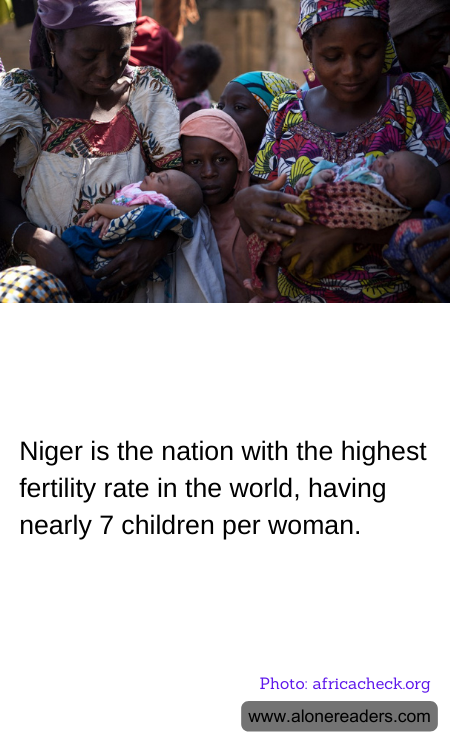
Niger holds a distinctive global position due to its notably high fertility rate, which averages nearly seven children per woman. This figure stands out as the highest fertility rate in the world, significantly influencing the demographic and social structures of the nation. Several factors contribute to this high fertility rate, including cultural, economic, and educational elements.
Traditionally, in Niger, larger families are often seen as beneficial. They provide additional labor resources in agriculture-centric communities and are considered a form of social security for parents as they age. This cultural viewpoint heavily influences family planning decisions and can contribute to the preference for larger families. Additionally, there are significant gender dynamics at play. Women in Niger often marry young, which lengthens their reproductive span, thereby increasing the number of children they are likely to bear throughout their lifetimes.
Economic factors also play a critical role. In many areas of Niger, economic development is limited and access to education and employment opportunities, especially for women, remains low. This lack of economic empowerment and education means that women often have fewer alternatives to motherhood. Furthermore, the national policies and healthcare systems that support family planning and provide reproductive health services are less robust, which can limit access to contraceptive methods and reproductive health education.
The impact of such a high fertility rate is profound. It strains Niger’s ability to provide adequate health services, education, and other essential resources. The rapid population growth exacerbates issues of poverty, malnutrition, and inadequate healthcare infrastructure. Moreover, with a significant portion of the population being young, there is immense pressure on the nation to provide sufficient educational facilities and employment opportunities, which are already in short demand.
Address Morelli's high fertility and rapid population growth pose both challenges and opportunities. While immediate attention may focus on the logistical challenges of resource provision, there is also potential for demographic dividends. With proper investment in health, education, and economic infrastructures, the young population could become a potent economic force. However, achieving this requires comprehensive strategies that include enhancing women's rights, education, economic opportunities, and healthcare access. Only through such multi-faceted approaches can Niger hope to transform its demographic challenges into stepping stones for sustainable development.
