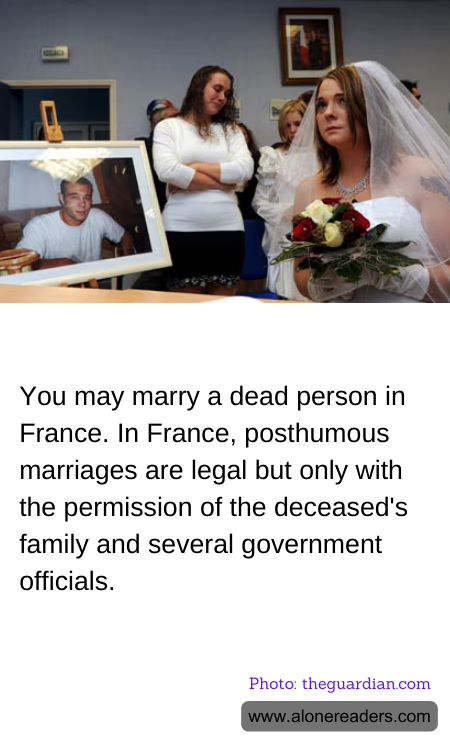
In France, the notion of marrying someone who has passed away might sound like the script of a gothic romance, yet it is indeed ingrained within the legal framework of the country. Known as "posthumous marriage," this act is grounded in French law and has been since it was first codified in Article 171 of the Civil Code in 1959. The origins of this law are as poignant as the act itself, primarily rooted in the tragic events of World War II where many couples were separated by death before they could wed.
A posthumous marriage can only occur if there is undeniable evidence that the deceased intended to marry their partner before passing away. This evidence can be in the form of a notarized document, an official declaration, or testimony that the deceased had expressed a clear desire to enter into marriage. The living partner must then seek formal permission from the President of France, a process that involves submitting a formal request to the local court. Additionally, the family of the deceased must also give their consent, ensuring that the marriage respects the wishes and the dignity of the dead.
The process, while seemingly straightforward, is rigorously controlled. It is not enough to have been merely engaged or in a casual relationship with the deceased; the level of commitment and intention is heavily scrutinized. Once all the permissions are granted, a ceremony can occur. This, however, is a ceremony in name only as there is no exchange of vows. The living partner stands before a state official in the presence of witnesses, and the marriage is recognized legally.
While the idea of marrying the deceased might seem unusual, it serves a significant purpose for those involved. It provides a formal recognition of a relationship and its emotional bonds despite the unfortunate event of death. For some, it is a profound way to honor a loved one’s memory and can play a crucial role in their grieving process. Moreover, it can have practical legal implications related to inheritance and the custody of children.
Despite its legality and the emotional solace it may provide, posthumous marriage remains relatively rare in France, with only a few dozen marriages reported each year. Yet, for those who pursue it, this provision is a testament to the enduring impact of love, capable of transcending even death itself. Critics and supporters alike find deep cultural and emotional insights in this unique intersection of love, law, and mortality.
