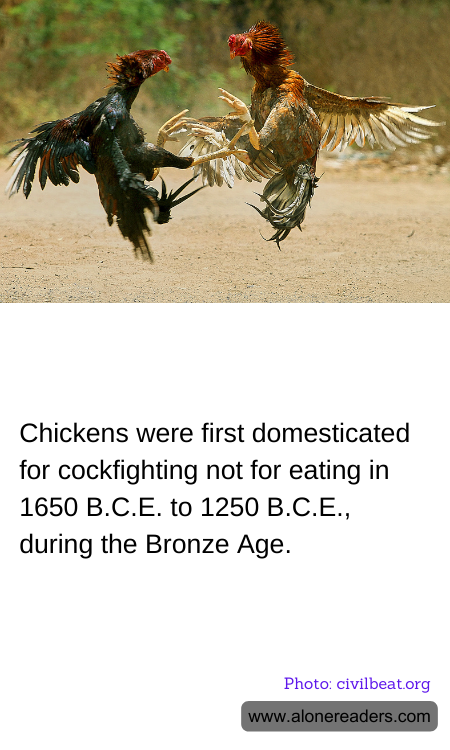
Chickens, one of the most ubiquitous domestic animals today, were first domesticated not primarily for consumption but for cockfighting. This practice dates back to the Bronze Age, around 1650 to 1250 BCE. The history of domesticated chickens begins in the dense jungles of Southeast Asia. It is believed that the Red Junglefowl, native to this region, is the primary ancestor of today's chickens. Initially, these birds were valued for their aggressiveness and endurance, qualities which made them ideal for cockfighting, a sport that was not only a form of entertainment but also a way to settle disputes and establish hierarchy within communities.
As these communities evolved and spread, so too did the purpose of keeping chickens. Over time, the utility of chickens for eggs and meat became apparent, leading to their selection for traits that enhanced these qualities. This shift marked a significant turn in the domestication process, expanding the role of chickens from combatants in an ancient sport to staples in agriculture and food production. Today, chickens are primarily raised for their meat and eggs, making them integral to global cuisine and agriculture. However, cockfighting still persists as a cultural tradition in some parts of the world despite being illegal in many countries due to concerns over animal welfare and ethics.
This transition from fighter to feeder over the centuries highlights the dynamic relationship between humans and chickens. It underscores not only the adaptational capabilities of chickens to various human needs but also reflects broader changes in human societies from the Bronze Age to the present. Understanding the origins and transformations of chicken domestication not only enriches our view of history but also informs current discussions about animal domestication, welfare, and food production practices around the world.
