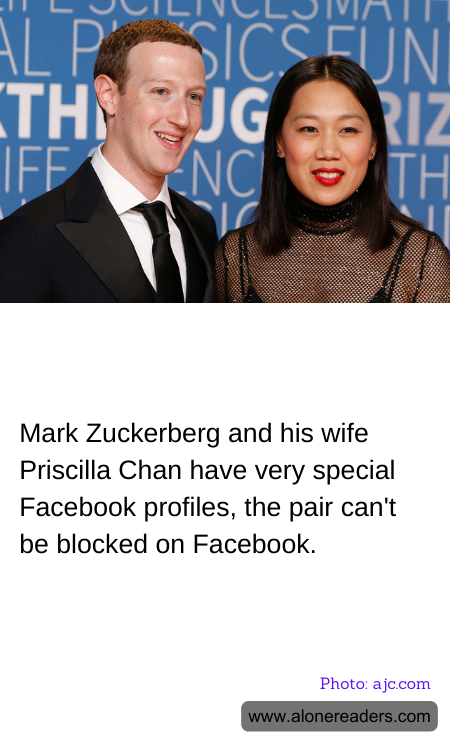
Mark Zuckerberg, the co-founder and CEO of Facebook, and his wife Priscilla Chan, have unique privileges on the social media platform that are not shared by other users, most notably, their profiles cannot be blocked. This specific feature of Zuckerberg’s and Chan's Facebook presence is not a new discovery but has gathered considerable attention over the years.
This development is directly linked to the functionality and safety measures ingrained within Facebook’s architecture. Primarily, the inability to block their profiles is intended to prevent abuse of the blocking feature. Typically, a normal user might face being blocked by hundreds or even thousands of people, but when millions of users block a profile, it can signal an attempt to disrupt the platform's ranking and search systems. For high-profile figures like Zuckerberg and Chan, this could result in technical issues and potential manipulations of the system.
Facebook has clarified that this unblockable status for certain profiles is a measure to prevent large-scale blocks that are intended to be more of an orchestrated campaign than a personal choice. It should be noted that this special status isn’t exclusive to Zuckerberg and Chan but extends to other high-ranking executives within the company. Such measures are crucial for ensuring that the social network runs smoothly and that malicious attempts to misuse features do not undermine the platform's integrity.
This policy raises questions about fairness and user control, with some arguing that all platform users should be treated equally. However, given the unique vulnerabilities faced by figures like Zuckerberg, who is often a target due to his public and influential role, these exceptions can be seen as necessary adjustments to maintain both the functionality of Facebook and the safety of its most at-risk users.
In conclusion, while the inability to block Mark Zuckerberg and Priscilla Chan might initially seem unusual, it underscores a broader approach to handling the complexities and potential misuses of a massively popular social media platform. It highlights the balancing act between user control and protecting the integrity and smooth functioning of the platform from unintended disruptions and abuses.
