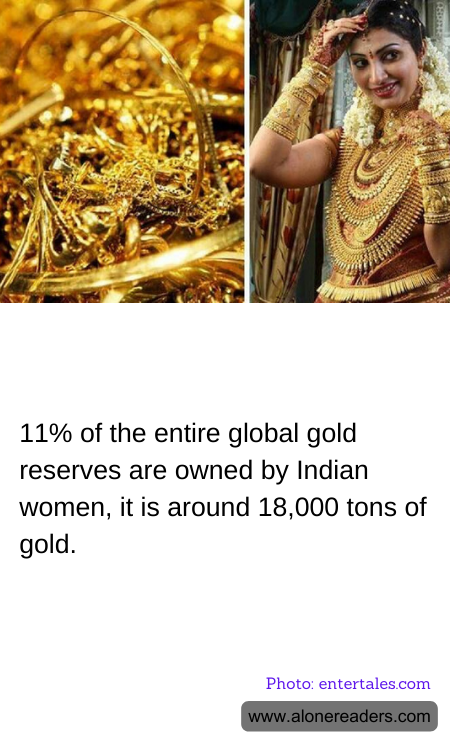
Gold has long been interwoven with the cultural, economic, and historical fabric of India, and its significance stretches far beyond mere financial value. Indian women, in particular, play a unique role in both the cultural and economic landscapes through their astonishing accumulation of gold jewelry and ornaments. It is estimated that Indian women hold about 11% of the global gold reserves, which equates to around 18,000 tons of this precious metal. This staggering amount surpasses the gold reserves held by many developed nations and underscores the deep-rooted tradition of gold ownership in Indian society.
This tradition is multifaceted, rooted in both historical and cultural practices. Historically, gold has been a form of wealth storage, a status symbol, and a significant part of various rituals and celebrations, most notably weddings. Gold jewelry is not just an embellishment; it is an integral part of the dowry that Indian parents give to their daughters, signifying financial security and social status. From elaborate necklaces and bangles to intricate earrings and rings, each piece of gold jewelry a woman owns tells a story of heritage, craftsmanship, and a deep-seated notion of security and prosperity.
The economic implications of this massive gold ownership are profound. While on one hand, it represents a vast store of wealth that underpins the financial security of millions of families, it also ties up much of the country's savings in a non-productive asset, resulting in significant opportunity costs. Economists often debate the impact of this cultural practice on India’s economic health, arguing that channeling these vast holdings into more productive investments could potentially drive faster growth.
Moreover, the gold demand driven by such deep cultural attachment supports not only the domestic jewelry market but also has significant effects on global gold prices and import policies. India is consistently one of the largest importers of gold worldwide, which not only affects the country's trade balance but also has implications for global gold markets.
In a broader perspective, the Indian woman's gold ownership is a fascinating example of how tradition shapes economic outcomes. It embodies the intersection of age-old traditions and modern economic considerations, highlighting a unique aspect of India’s socio-economic landscape that continues to evolve with changing times and attitudes. Whether viewed as a cultural artifact or a piece of economic strategy, the gold owned by Indian women remains a powerful symbol of continuity and change in one of the world’s largest and most dynamic societies.
