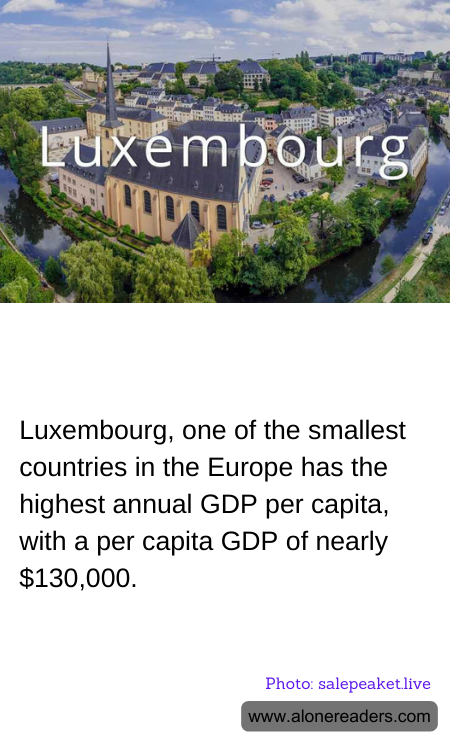
Luxembourg, a small yet powerful player in the European landscape, boasts the highest GDP per capita globally, nearing a staggering $130,000. Despite its compact size, covering just about 2,586 square kilometers, its economic prowess paints a picture of immense wealth and a highly developed financial sector. This grand duchy, nestled between Belgium, France, and Germany, leverages its strategic position in the heart of Europe, serving as a hub for major European institutions and a host for numerous multinational corporations.
The secret to Luxembourg's remarkable economic success lies in its sophisticated banking sector and proactive fiscal policies. Renowned as a global financial center, Luxembourg's finance sector is pivotal, comprising more than 35% of its economy. The country is also home to over 150 banks—more per capita than any other country—making it one of the largest banking centers in Europe. Furthermore, its favorable tax environment attracts a plethora of foreign investments, and it is often cited as a prime example of a tax haven.
In addition to finance, Luxembourg has diversified its economy into other sectors such as telecommunications and steel production. The country also boasts a robust legal framework for intellectual property, making it an attractive destination for tech companies. Moreover, it supports a burgeoning space industry, primarily through the Luxembourg Space Agency, which has embarked on ambitious projects like asteroid mining.
Luxembourg's high GDP per capita is also reflected in the high standard of living for its residents. It offers an extensive social welfare system, excellent health services, and public infrastructure, contributing to a quality of life that is among the best in the world. Education, too, plays a crucial role in sustaining economic growth and social inclusion, with multilingual schooling systems that cater to its diverse population.
This economic fortress does, however, face challenges such as housing market pressures and sustainability issues. The high standard of living has led to steep housing prices, making affordability a pressing concern. Moreover, despite its economic might, Luxembourg is grappling with environmental sustainability, particularly in its commitment to reducing greenhouse gas emissions and transitioning to renewable energy sources.
In conclusion, Luxembourg's high per capita GDP is an emblem of its economic success, driven by a thriving finance sector and strategic positioning in Europe. The nation exemplifies how favorable policies and a focus on high-value industries can propel a small country to global prominence in wealth and economic stability. However, it must continue to navigate the challenges of sustainability and housing affordability to maintain its enviable status.
