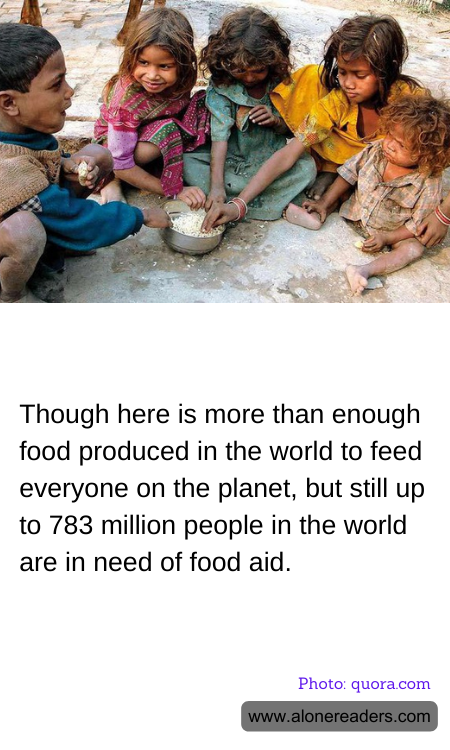
Despite the global agricultural industry producing more than enough food to feed every individual on Earth, food insecurity remains a pressing challenge, plaguing up to 783 million people worldwide. This paradox of plenty—where massive food production coexists with widespread hunger—stems from several complex and interlinked issues, rather than a straightforward shortage of food.
Firstly, uneven distribution of food resources plays a significant role. While some regions produce surplus food, logistical challenges, economic constraints, and political conflicts impede the distribution of this food to areas where it is most needed. Often, the regions with the highest levels of hunger are embroiled in conflict, have poor infrastructure, or lack the economic means to import or buy sufficient food despite available global supplies.
Economic disparities further exacerbate the situation. Even in countries with ample food supplies, poverty can prevent large swathes of the population from accessing the food that's available. This is seen in both developing and developed nations, where low-income families struggle to afford nutritious meals. Thus, hunger and malnutrition persist not due to a lack of food, but due to poverty that limits purchasing power.
Additionally, food waste contributes significantly to the discrepancy between production and hunger. It is estimated that approximately a third of all food produced globally is either lost or wasted. This not only represents a misallocation of resources but also a missed opportunity to direct this excess towards nourishing the hungry. Reducing food waste is thus critical in the global fight against hunger.
Addressing these issues requires coordinated global efforts involving governments, international organizations, NGOs, and the private sector. Strategies such as improving food storage and transportation infrastructure, stabilizing local markets, and enhancing food distribution networks can help alleviate hunger in underserved regions. Furthermore, policies aimed at tackling poverty, ensuring economic accessibility to food, and reducing food waste are essential.
Ultimately, the challenge of world hunger, despite adequate food production, underscores the need for comprehensive strategies that address the root causes of food insecurity. By doing so, the global community can move closer to achieving the goal of zero hunger, ensuring that the bounty produced by our agricultural endeavors truly benefits all humanity.
