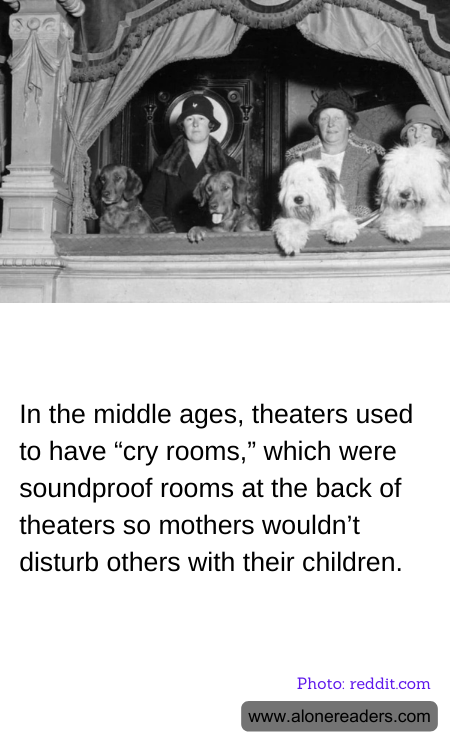
In the middle ages, the communal experience of watching plays and performances was a significant aspect of social life. However, recognizing the potential for disruptions, especially from young children, many theaters introduced a novel feature known as "cry rooms." These were soundproofed rooms situated at the back of the theater, designed specifically to cater to mothers with infants or small children.
The creation of cry rooms was an early example of inclusive design, making it possible for mothers to still participate in cultural and communal events without the fear of disturbing others. Inside these rooms, the sound from the main auditorial area was piped in, often through a series of primitive acoustic devices, enabling the occupants to follow the performance without causing any disturbance to other theatergoers.
This arrangement benefited all parties involved; mothers could attend to their children without missing out on cultural activities, children were introduced to the arts at a young age in a more tolerant environment, and other patrons could enjoy the performance undisturbed. While these rooms faded out of popularity and necessity with the advent of modern theater technology and changing societal attitudes towards children in public spaces, they remain an interesting footnote in the history of theatrical architecture. Today, the concept of cry rooms has evolved and can still be found in some modern theaters as well as in other venues such as churches, highlighting a continuous effort to balance community inclusion with respect for the shared experience of all attendees.
