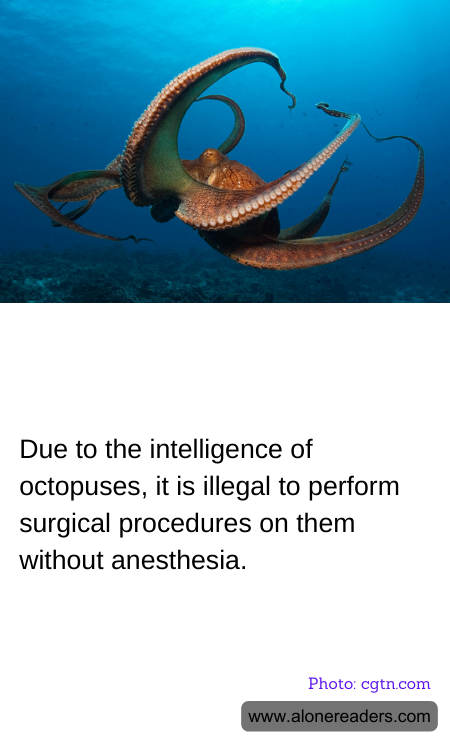
Octopuses are among the most intelligent creatures in the animal kingdom, demonstrating abilities such as problem-solving, mimicry, and even using tools. This high level of intellectual capability has prompted ethical considerations regarding their treatment in research and captivity. Recognizable for their complex nervous systems and sensitivity to pain, octopuses are protected under animal welfare laws that are often comparable to those applied to vertebrates.
In many countries, legislation dictates that octopuses cannot undergo surgical procedures without anesthesia due to their capacity to experience pain, distress, or harm. This regulatory stance reflects a growing scientific consensus on the cognitive and sensory capacities of cephalopods, which include octopuses, squids, and cuttlefish. For instance, in the European Union, cephalopods were included in a directive covering the protection of animals used for scientific purposes, enforced from 2013. This directive mandates that any procedure likely to cause pain or distress requires appropriate measures to manage such effects.
The requirement for anesthesia is not only a reflection of legal and ethical standards but also highlights the significance of humane treatment approaches in research settings. Using anesthesia helps minimize the suffering of these animals during experiments that could involve invasive procedures, thereby aligning scientific practices with broader welfare-centric values. Moreover, these practices encourage researchers to develop alternative methods that could further reduce the need for invasive techniques.
This approach to the treatment of octopuses underscores a broader shift in the consideration of non-vertebrate animals in both scientific and public domains. It acknowledges their complex biological and neurological attributes and promotes a more respectful and humane interaction with these remarkable creatures. By extending ethical protections typically reserved for vertebrates to octopuses, societies reflect their growing awareness of the rich mental lives and capacities of a broader range of organisms. This form of legal and moral recognition is pivotal as it paves the way for more comprehensive animal welfare legislation that is inclusive of various species traditionally overlooked by earlier laws.
